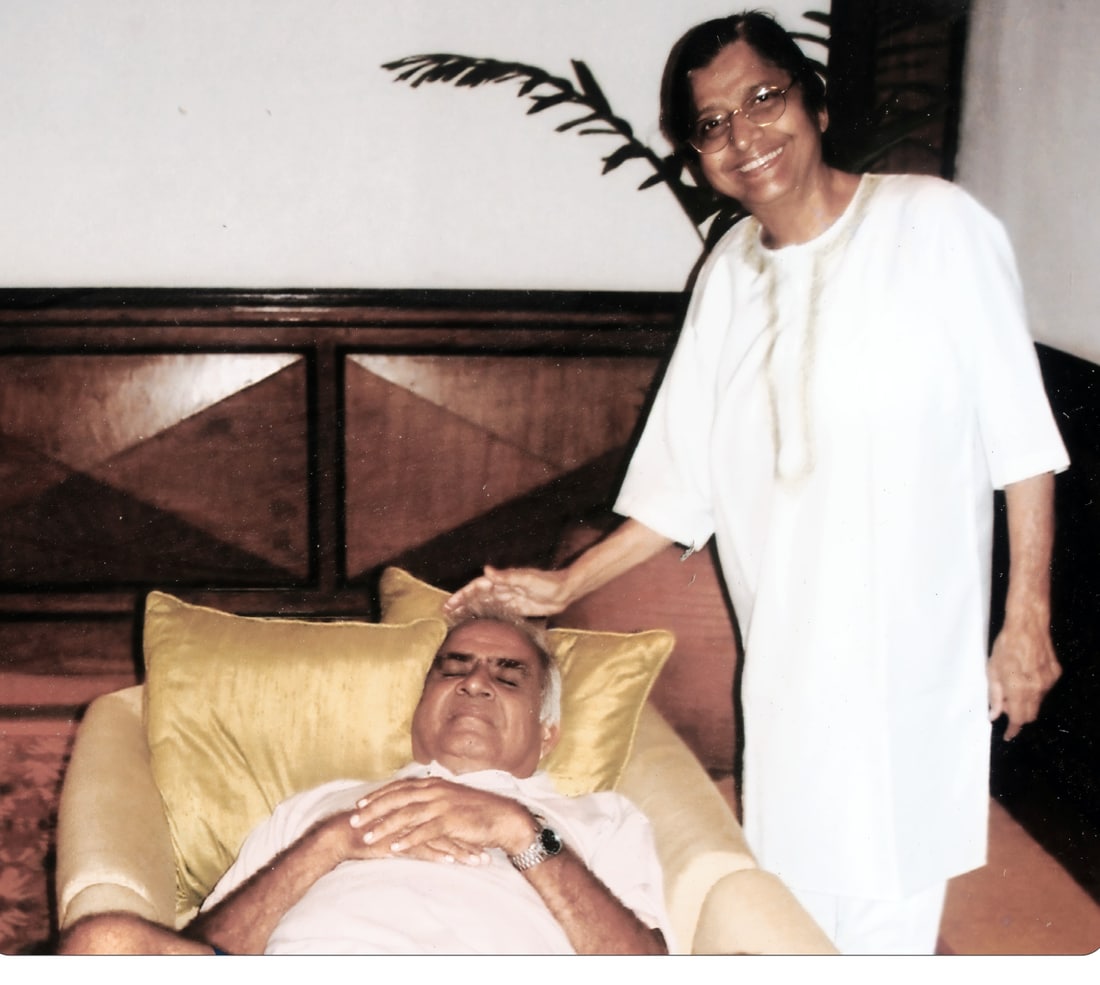
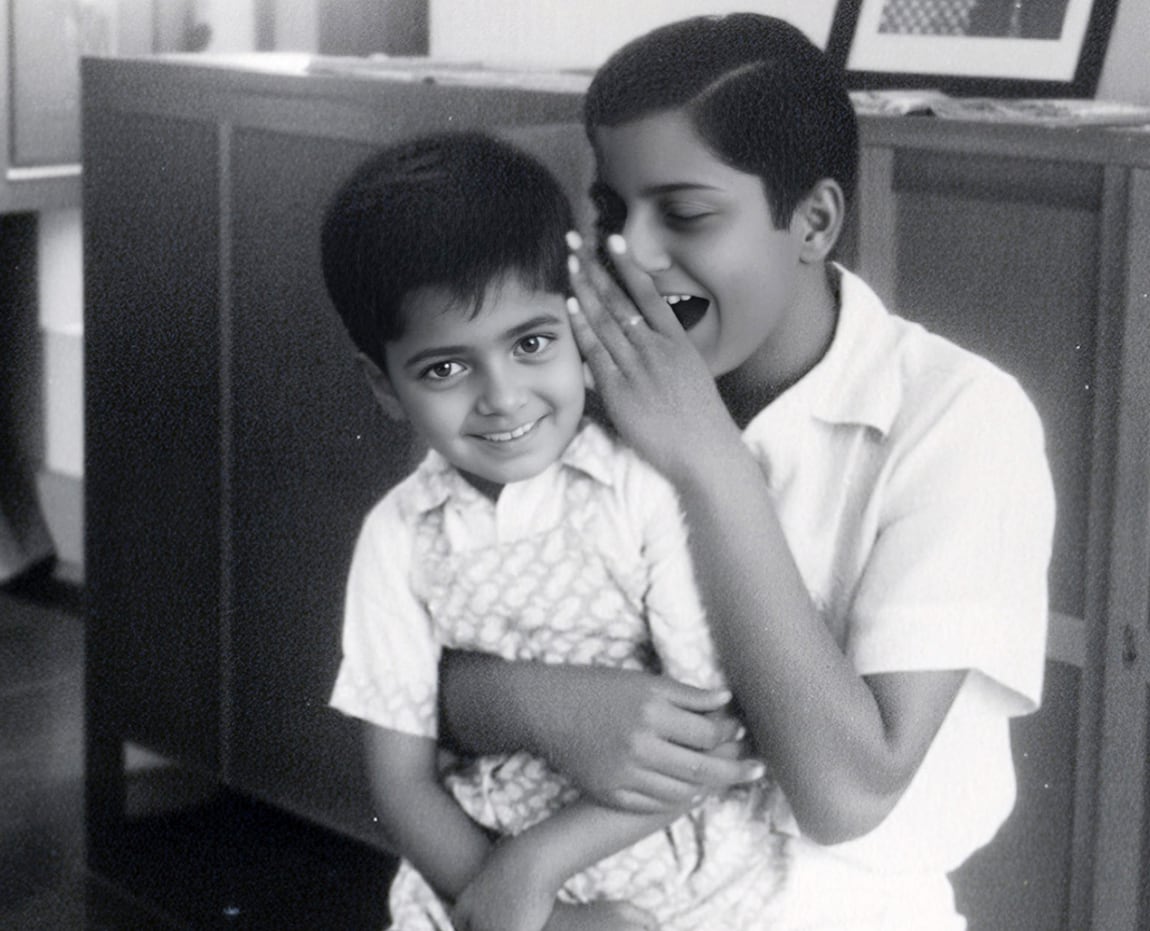
I was extremely excited. I was a little over ten when we got the news of his birth. However, it would be almost a year and a half before I would get to see my baby brother Promesse. Even at that very tender age, he had those great soulful eyes that filled his face with their radiance, and were the focus of his contact with everyone.
I was around thirteen when Promesse and my parents came for almost every Darshan and often stayed with us at the Dortoir.
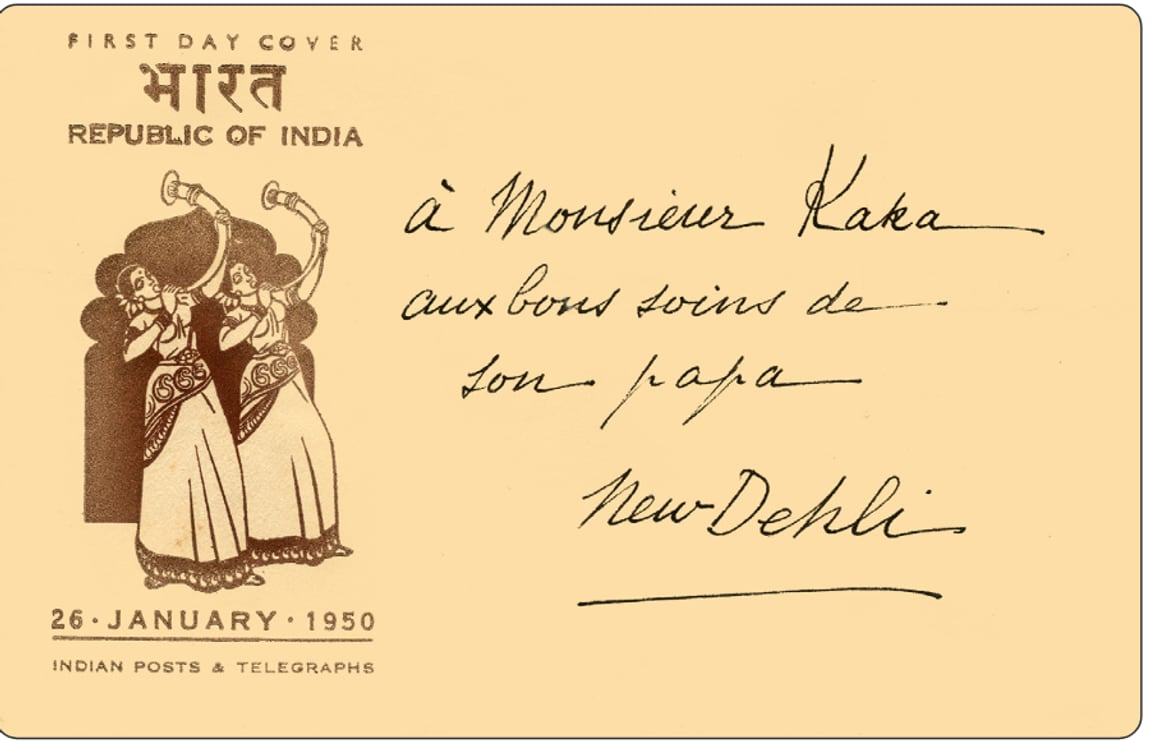
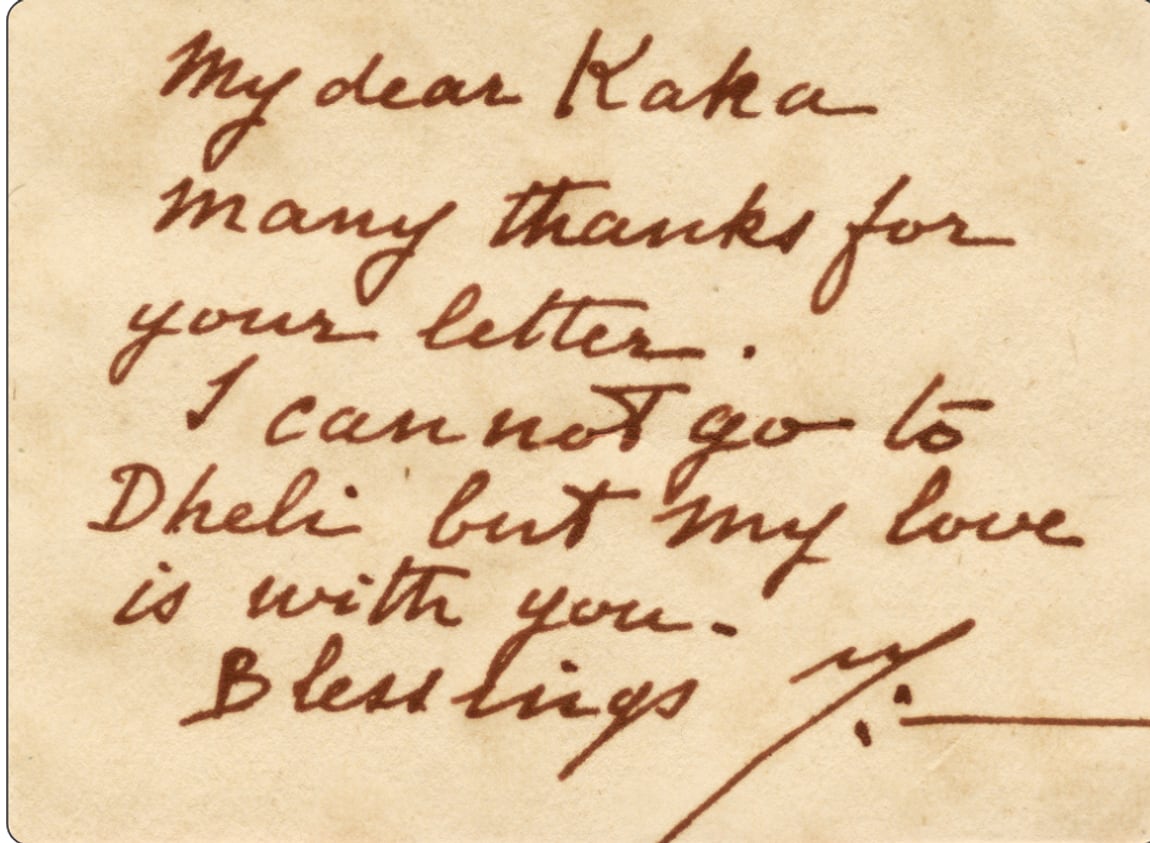
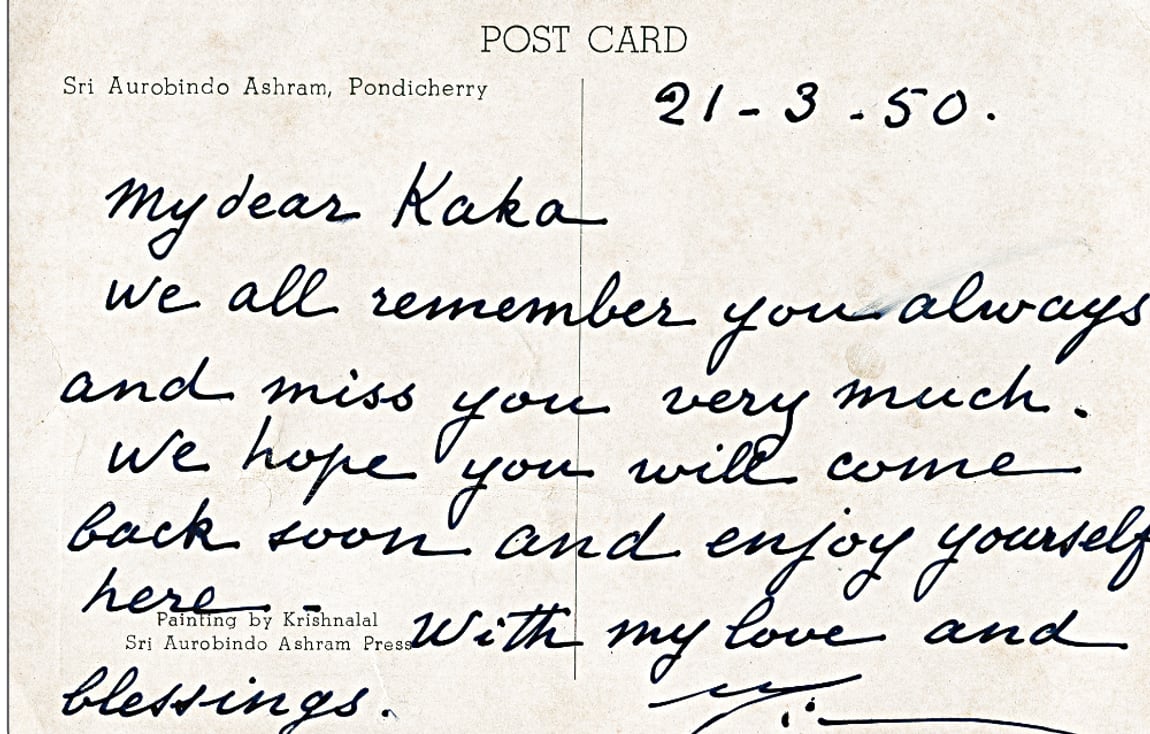
On returning to Delhi, he would often think of the Mother and tell my father that he wanted to go to see Her. My father would then tell him to write a letter and would write it on behalf of Promesse, expressing his feelings as closely as possible. On two occasions when I took Promesse’s letters to the Mother, She wrote back an answer which was posted to him. These two letters are reproduced here:
In keeping with our family tradition, a boy’s first tonsuring ceremony is performed during his third year of life, on Janmashtami. This is considered to be a very auspicious and sacred occasion in the life of a child.
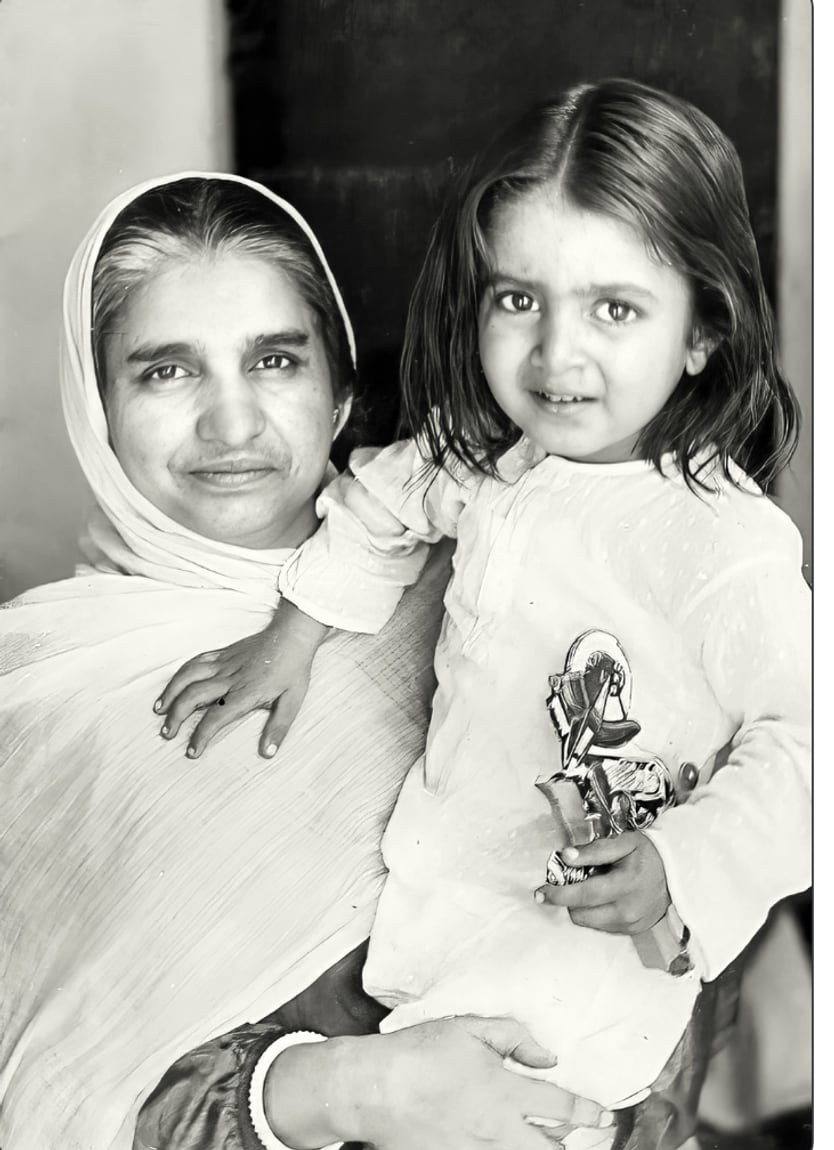
Promesse’s mundan ceremony was performed in Pondicherry in a different manner. My father took him to the Mother in his ceremonial dress for her blessings.
The Mother took Promesse in Her arms and said, “Oh, such beautiful hair are to be cut! No, he is looking so beautiful with this long lovely curly hair, why cut them?”
The Mother then brought out a pair of scissors and cut a little lock of his hair and said, “I have performed his ceremony. No more hair to be cut. Now you can take him and finalize the ceremony and give the feast”.
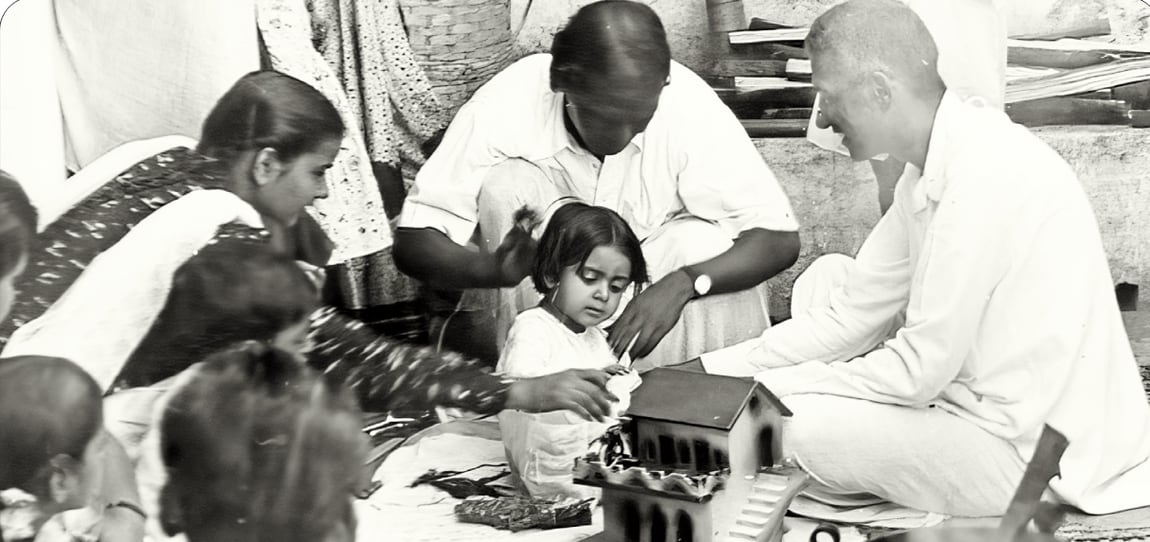
Manohar-da then trimmed the hair neatly adhering to the ritual and the ceremony was thus performed.
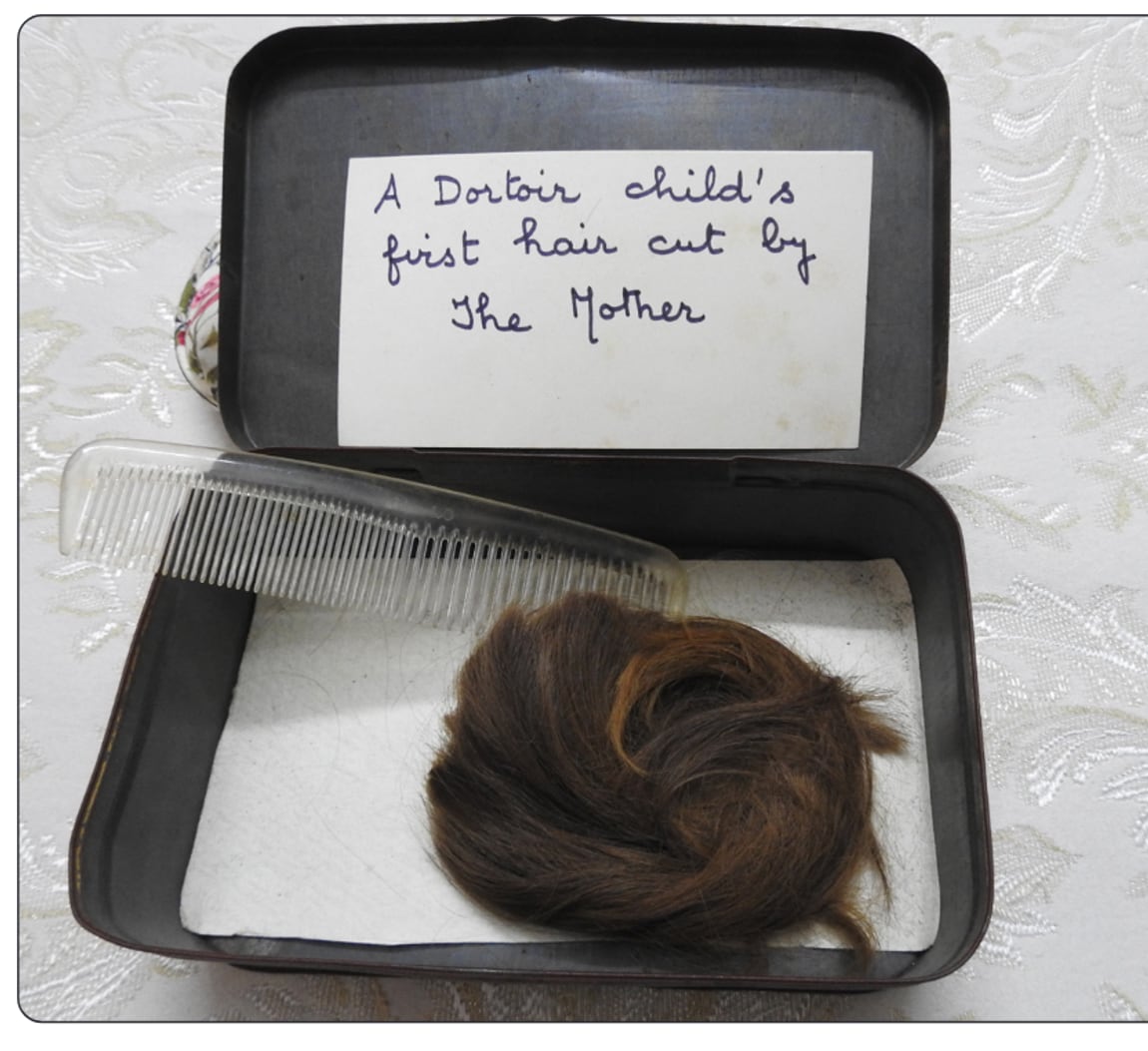
Promesse carefully preserved the lock of hair and the comb that the Mother used to cut his hair and kept them in a box in his room until the end of his life. The box is now at Sri Smriti, Sri Aurobindo Ashram, Delhi Branch.
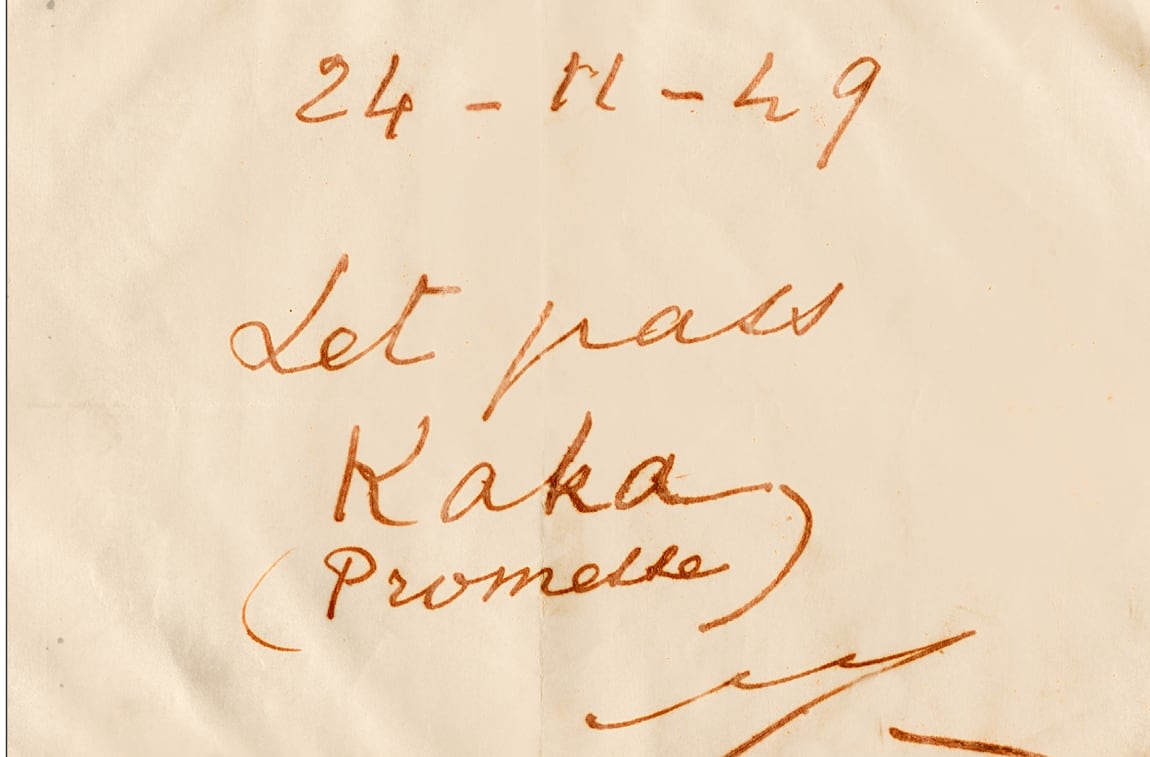
On 24th November 1949, when Promesse was not yet three years old, I asked the Mother if he could go for Sri Aurobindo’s Darshan. At that time, children below the age of four or five (I don’t remember exactly) were not permitted to attend Sri Aurobindo’s Darshan. The Mother wrote a note granting permission on a piece of paper. I believe Promesse was the youngest child to receive Sri Aurobindo’s Darshan.
He continued to go regularly with me to the Mother. I remember some interesting anecdotes connected with these visits. A big bakelite crane stood in one corner of the Mother’s room. Promesse would invariably point to it and say: “Mothel, Mothel, batak batak!” Finally, The Mother gifted him that ‘batak’ (crane) when She came to visit our house on his third birthday.
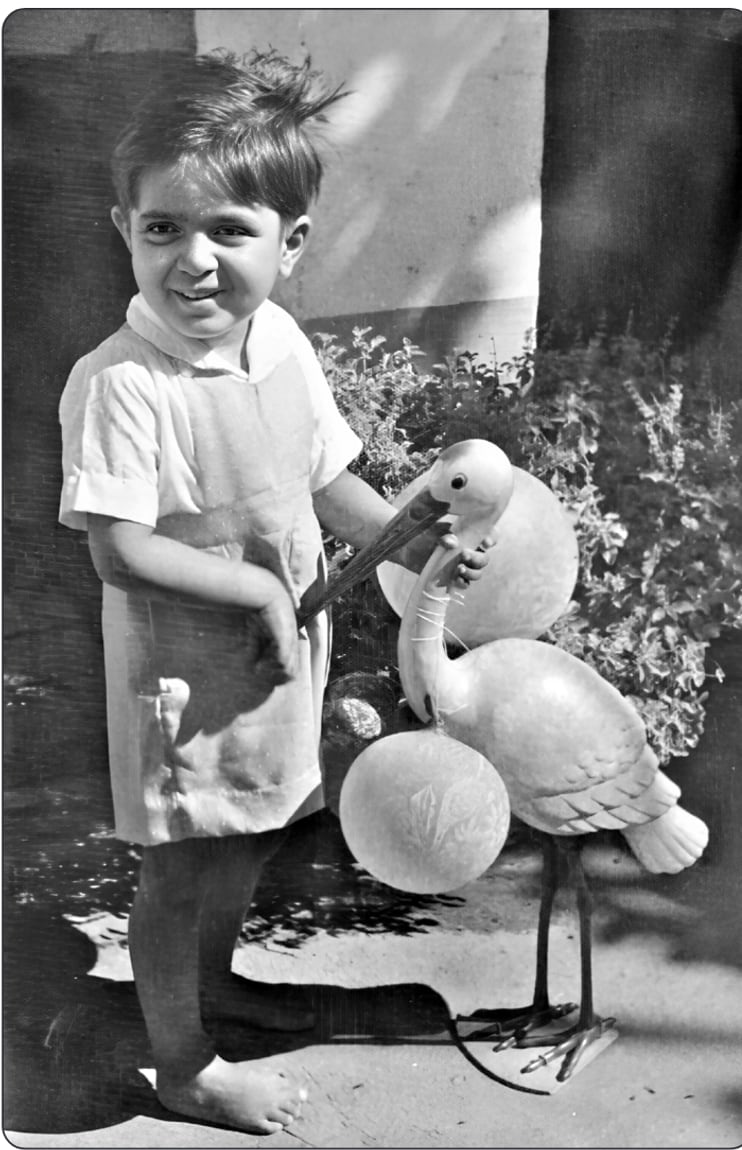
At that time, we lived where part of Aurofurn now stands. The few steps leading to the house from the footpath are still there. The Mother brought the crane with some balloons tied to it as a birthday present for Promesse. The crane is now preserved at Sri Smriti, Sri Aurobindo Ashram, Delhi Branch.
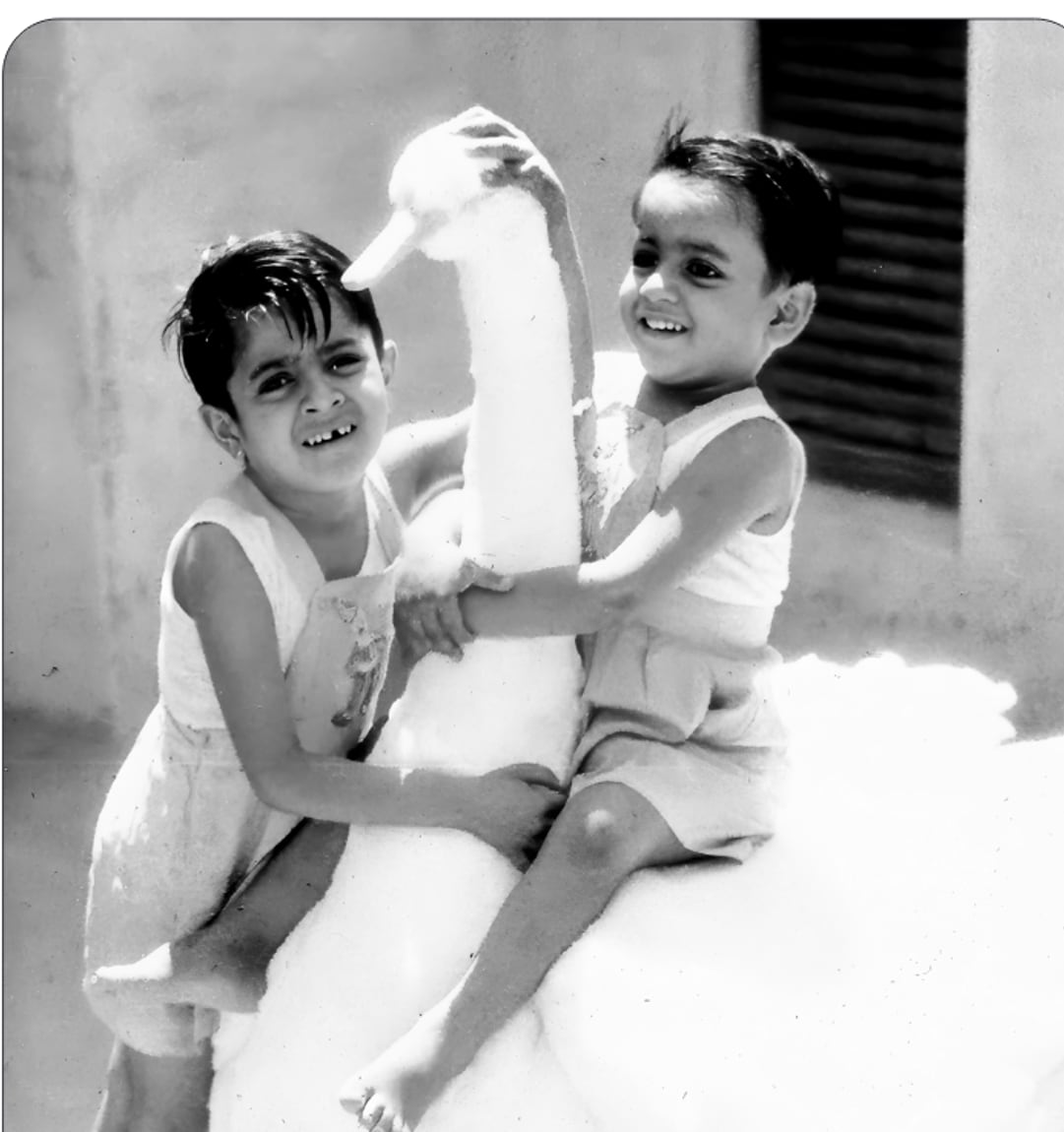
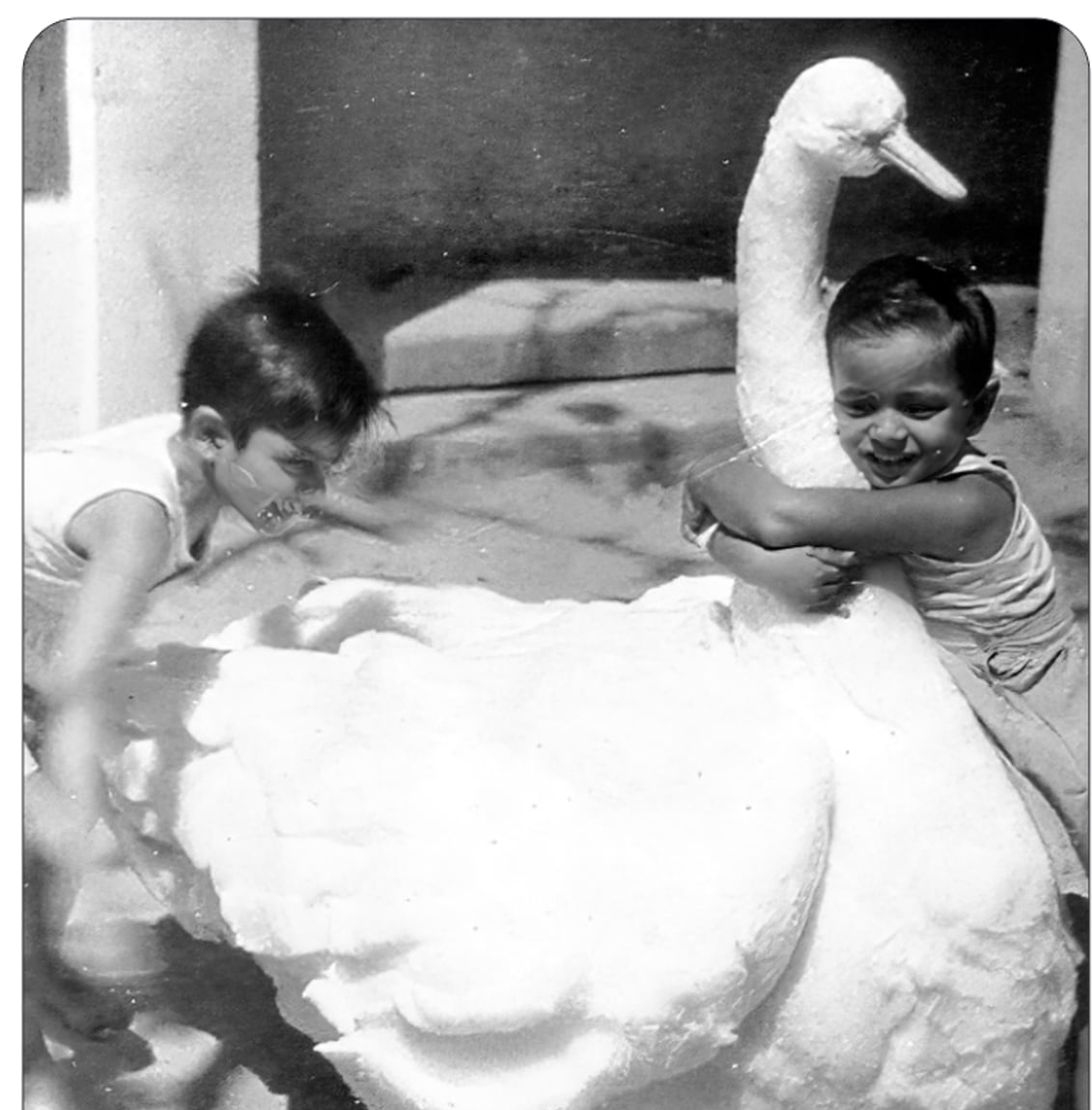
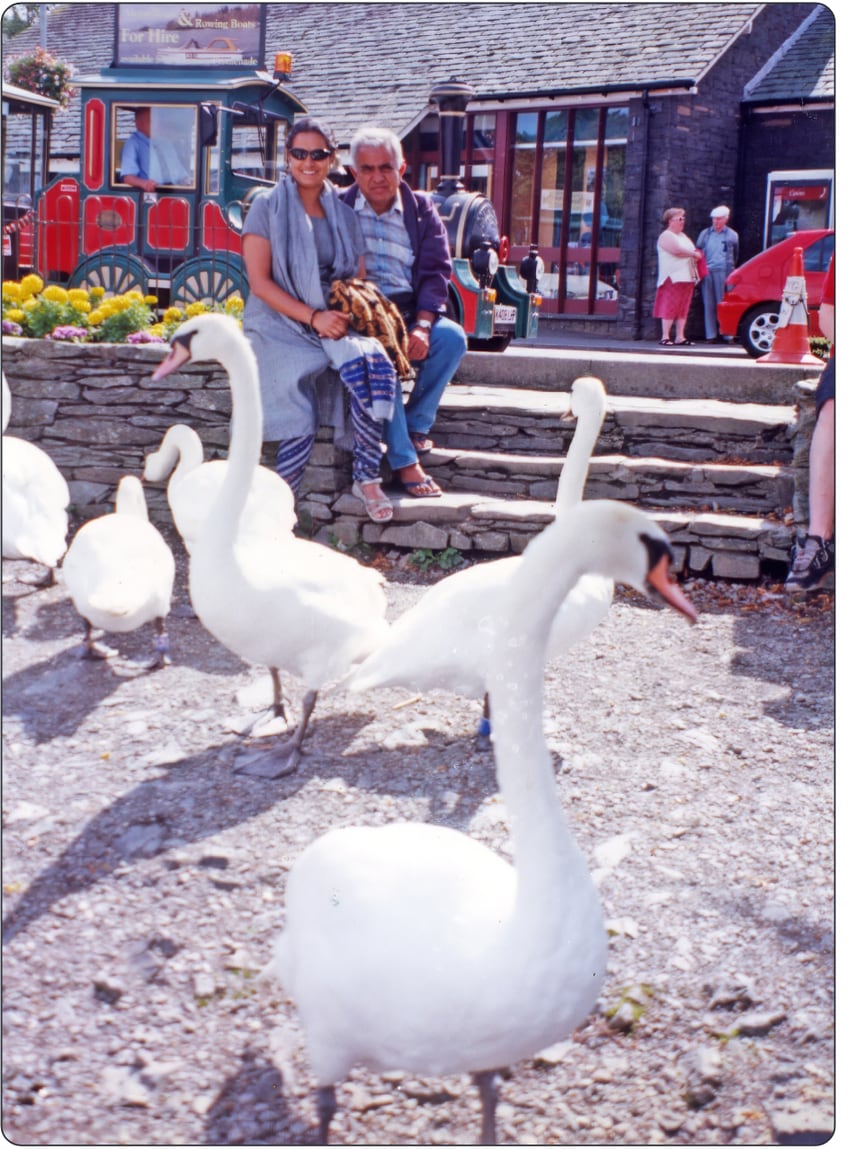
Promesse’s fascination for ducks persisted into adulthood. This photo with swans was taken on a trip to Manchester.
In those days, visitors who wanted to join the playground groups even for a few days, were permitted by The Mother. Hence, whenever Promesse would come to Pondicherry, he would be allowed to join the youngest Green group children, much to his delight. Once he permanently shifted to Pondicherry and joined the youngest group A5, he learnt to do all kinds of races. On one occasion, when he went upstairs to The Mother with me, he challenged The Mother to a running race.
We were in the corridor on the first floor of the Ashram. “Mothel, Mothel, running race”, he said and ran off down the corridor with The Mother following him. Then he came back and said, “Mothel, Mothel, walking race.” Again, he sped off down the corridor, with The Mother behind him. He then sat down and putting his hands on the floor piped up, “Mothel, Mothel, rabbit race”. Mother laughed and said, “Ah, ca, je ne le peu pas faire!” (“Oh, this I cannot do.”)
The Mother would daily distribute toffees to all of us. Promesse would invariably stretch out his little hand and say, “Mothel, Mothel, topffee, topffee.” As soon as Mother gave him a toffee, he would slip it into his other hand behind his back, and hold out the first hand again for another toffee! This would continue for a while till Mother would gently say, “Non, mon petit, ca suffit.” (“No, my little one, this is enough.”)
In the evenings when The Mother watched the Gymnastic March of the elderly people, Promesse would often be around. One day, he walked up to the Mother and, without hesitation, pulled the footstool out from under Her feet and sat on it. I saw this from a distance and ran to stop him, but the Mother stretched out Her hand to signal that I should not say anything. He did this several times. Such was the love young Kake received from the Mother.
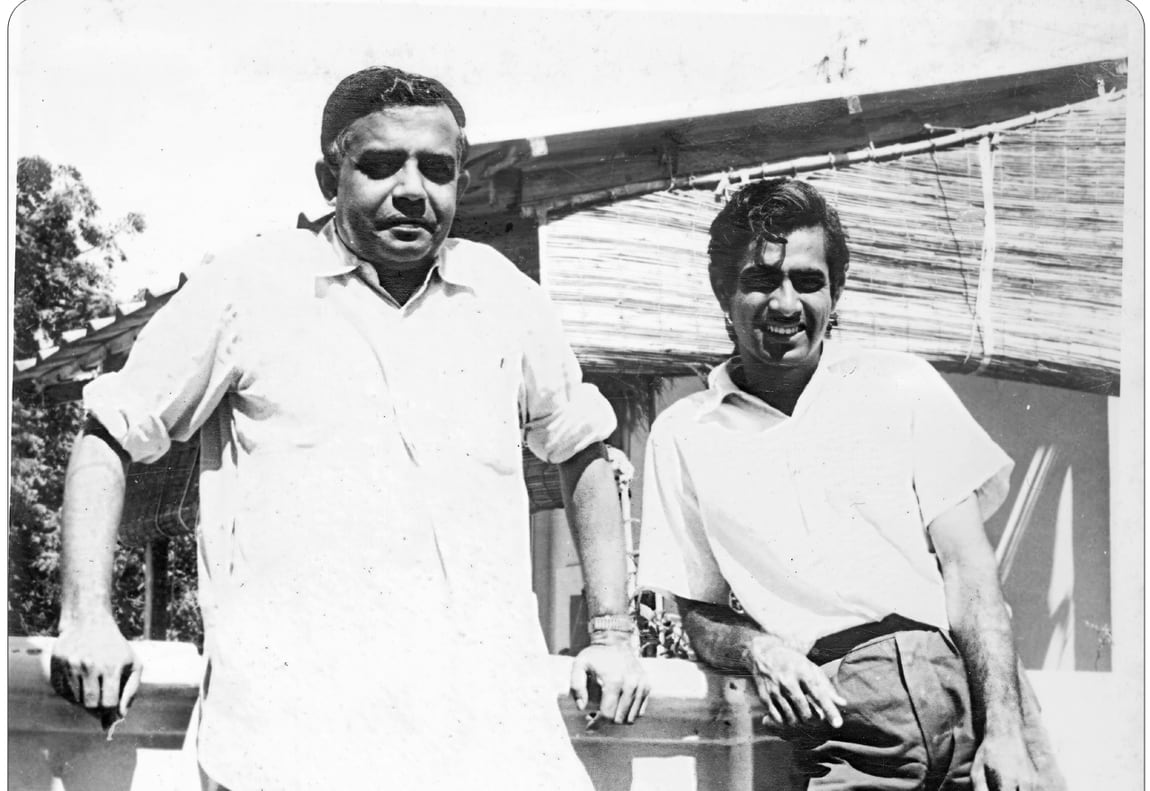
Since he was the only child of his age in the Ashram then, old and young, all enjoyed pampering him, especially Sunil-da and the Ganguly family. As he grew, he (and my youngest brother Victor) developed a very close bond with Sunil-da. Through adolescence and later, they confided in Sunil-da, who helped them both to grow and discover themselves.
Promesse was a staunch believer of the Free Progress System and worked towards its success throughout. He also had great leadership qualities. In the afternoons, his room would be filled with students who came to learn a wide variety of subjects from him, ranging from science and mathematics to computer science, watch repairing, stamp collecting, jigsaw puzzles, and numerous other pursuits.
When the Free Progress System derailed for a while in our school, he left and joined the Lake Estate where he worked for a number of years. He was always concerned about the welfare of the people at Lake Estate, but finally returned to his first love — teaching in the Free Progress System.
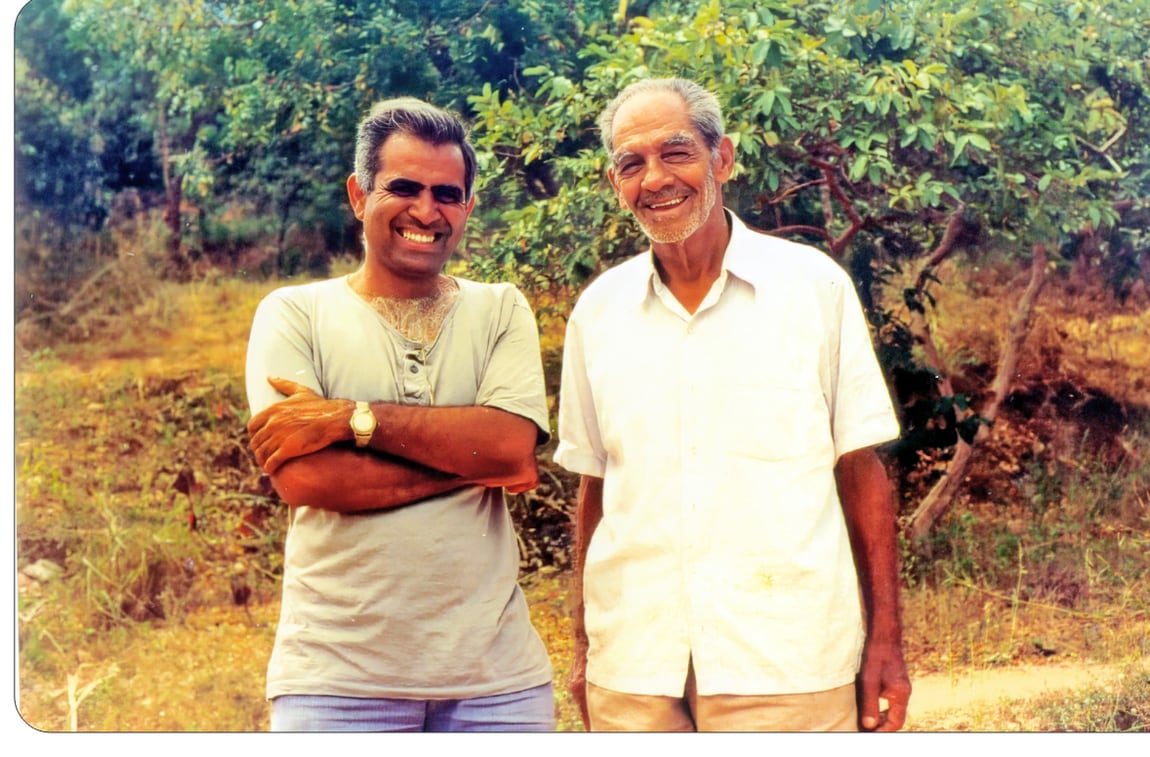
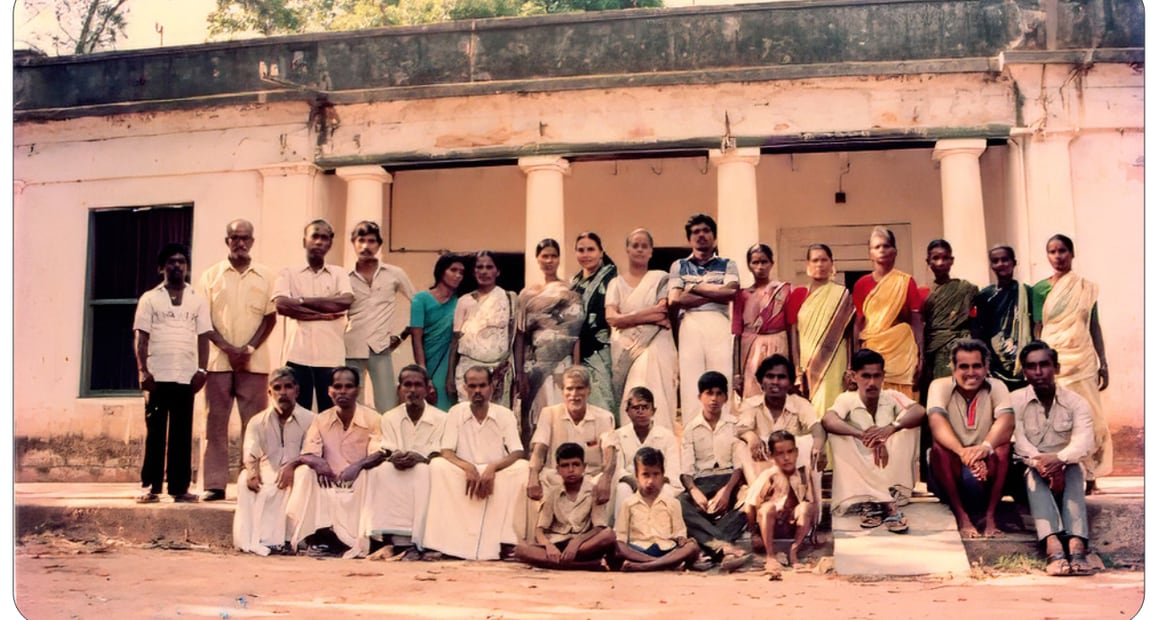
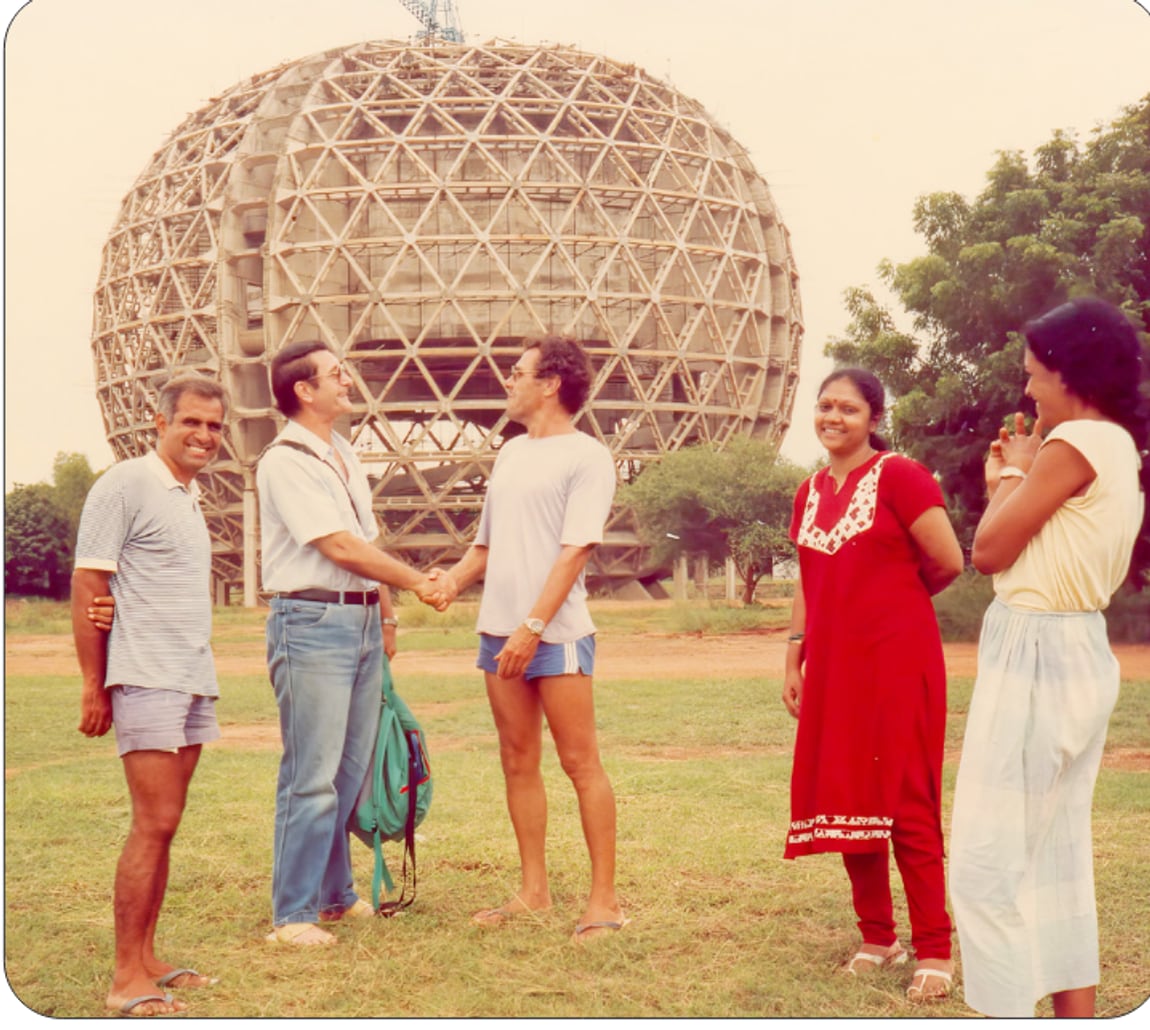
Similarly, in the early days of Auroville, he was among the first to take his band of youngsters there at night to help build the roads. He had a contagious enthusiasm and was always ready to take the lead in any project in which he believed in. I often chided him as an elder sister for his over-enthusiasm but also admired him for many of his characteristic qualities. When the Sports ground was being constructed, he led a group of youngsters to work there at night to expedite the completion. I wrote to The Mother to let her know that he came back very late every night.
“Sweet Mother, My brother (Promesse) has started working in the Sports Ground at night along with some other boys. I do not know if this is all right for him after all the studies during the day and the physical education activities in the afternoon. He does not even take rest after lunch. He says he does not feel tired. Last night he returned from the Sports Ground at midnight, but he says that in future he will return earlier.
Mother, if you think it is all right, then I can let him continue.”
The Mother replied:
“If he does it with pleasure, it does not matter much at his age, provided it does not last for too many days. In any case as soon as he feels tired, he must take rest. Blessings.”
24 May 1963, (excerpt from the book, “Growing up with The Mother” by Tara Jauhar)
Throughout the journey of Promesse Jauhar’s life, we come across one fact that constantly stands out, as memoirs, anecdotes and in photographs — Promesse’s life was marked with a rare simplicity and decorated with an even rarer humility.
Everything he did, he did quietly, without any expectation or ‘aham’, for every act of his was consecrated to the Divine and was rooted in his inner allegiance to Sri Aurobindo and The Mother. Their presence in his life was the compass by which he steered every thought and every action.
Years ago, Sri Aurobindo Ashram Delhi Branch hoped to obtain a small space in Auroville so that ashramites visiting from Delhi could have a place to stay within the community. However, the request could not be fulfilled. Some time later, Auroville expressed interest in a piece of land owned by Promesse.
In his practical and generous nature, he suggested a simple exchange — his land for a small space where Ashramites from Delhi could stay. Though this arrangement never materialised, he had in his heart moved far beyond negotiation.
He had quietly decided to offer the land to Auroville unconditionally, expecting nothing in return. This offering was never for himself or for family but for the comfort and convenience of others like him who aspired to serve the Mother’s vision.
Promesse had in paper translated this spirit of offering by bequeathing this land in Pondicherry to Auroville Foundation. This was not a legal formality but a small contribution, an inner offering in his sincere, simple manner to the work of Sri Aurobindo and The Mother. Through this offering, he wished to support the spiritual aspiration, human unity and collective progress that the Mother dreamed for Auroville, just like the devoted little squirrel that served Lord Rama with humble grains of sand during the construction of the Ram Setu.
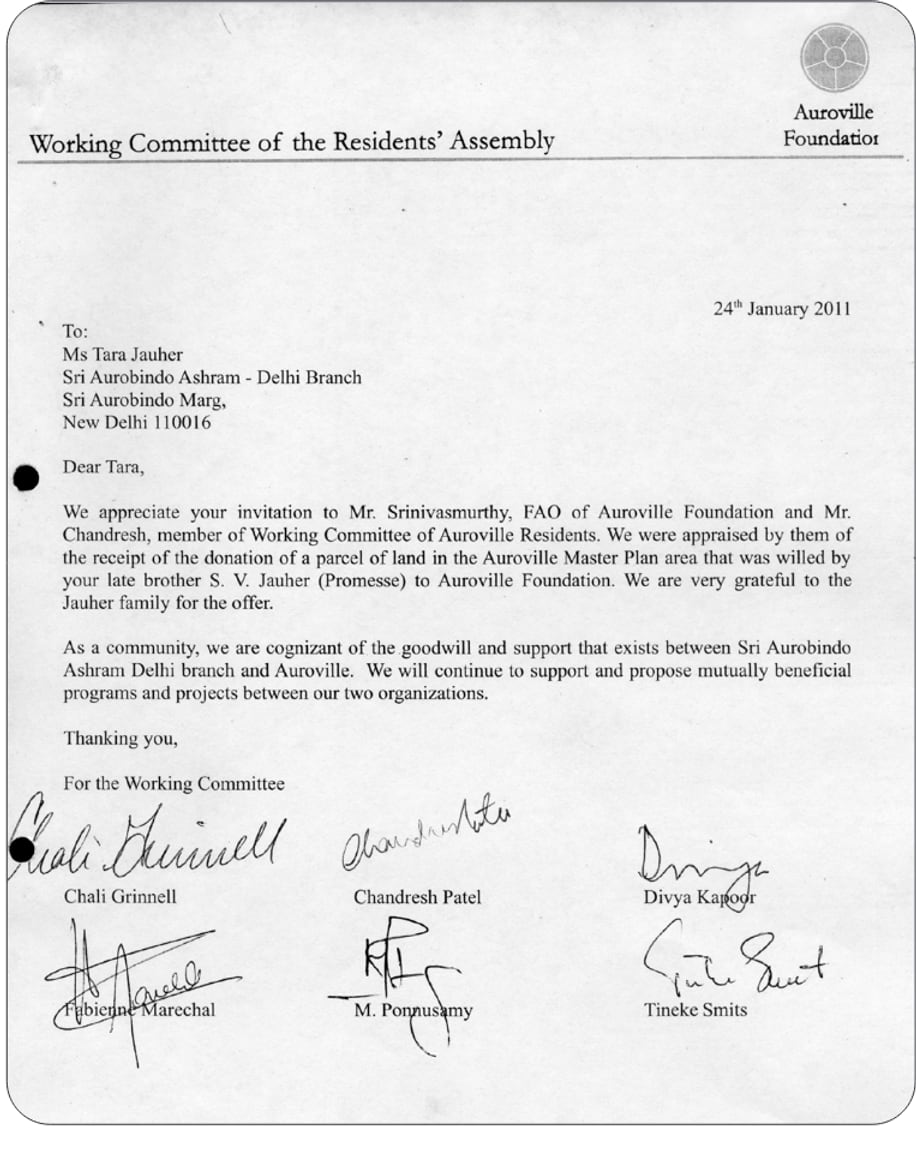

This gesture is another expression of who he was, his life a long journey of quiet, unobtrusive giving without the slightest expectation of acknowledgement. And with this final offering, he has left behind a legacy that speaks more eloquently than a string of words, a heart of devotion aligned with a higher purpose, unwavering in its service to the Divine work.