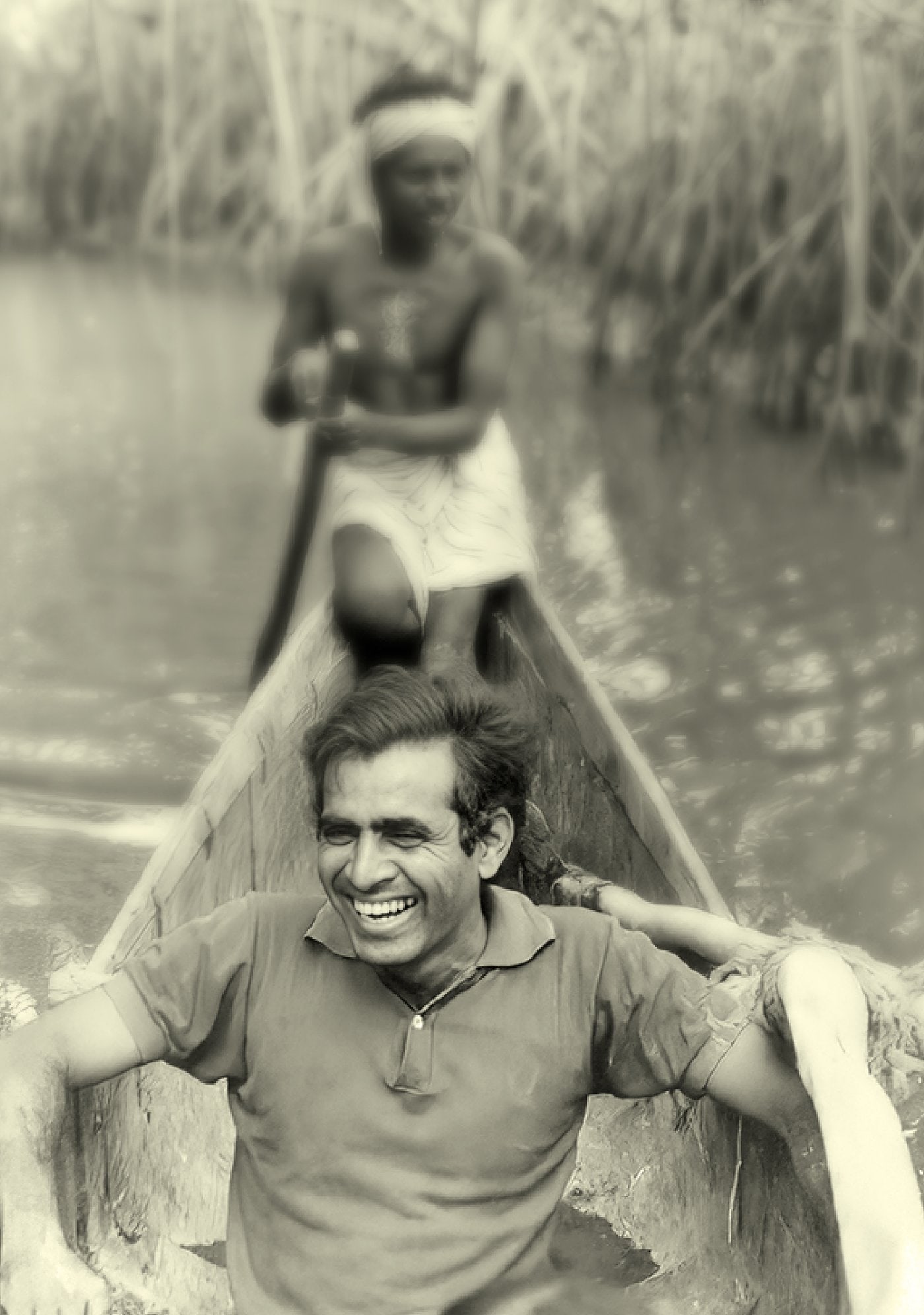
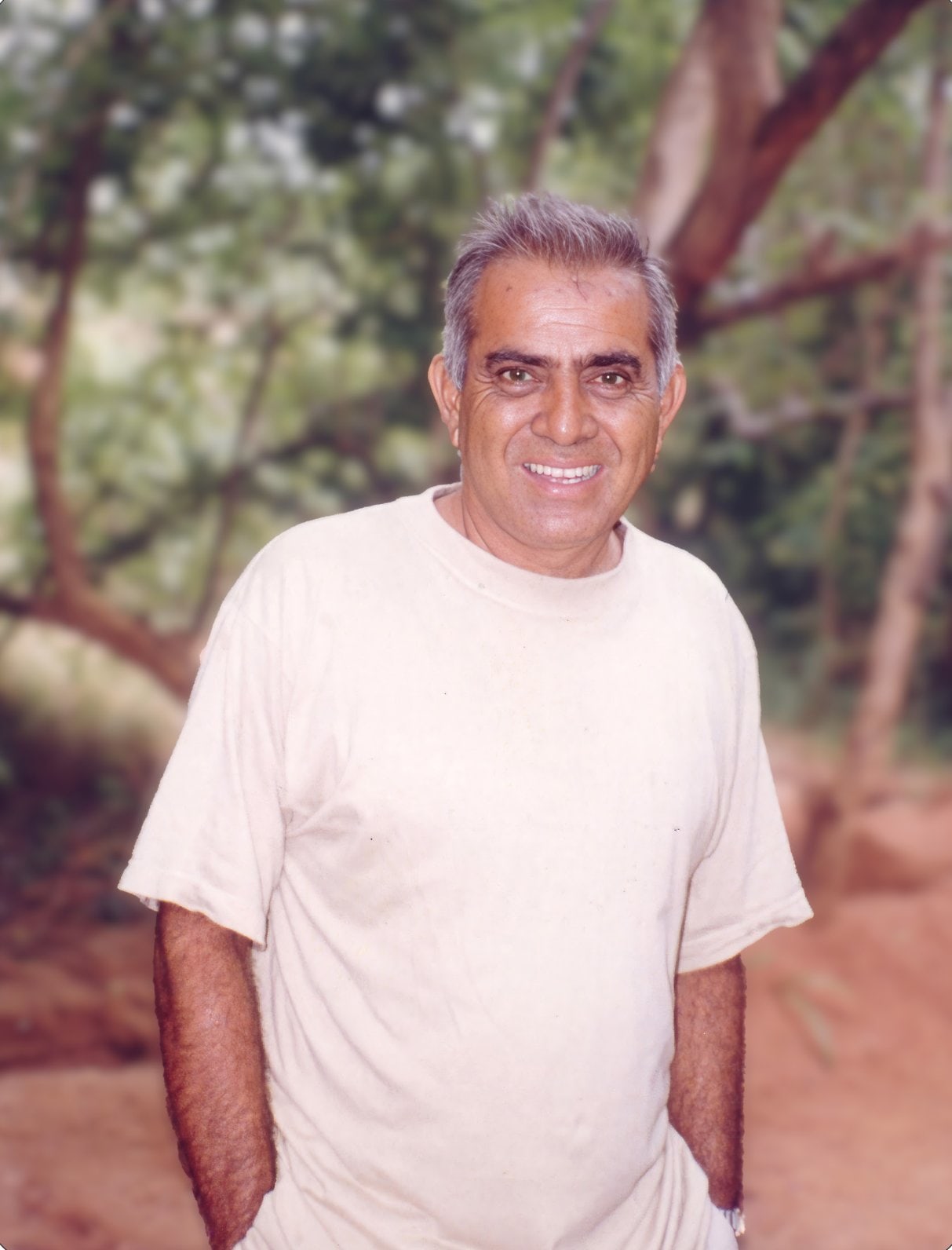
To Sir, with love…
(A few heartfelt loving memories from here and there)
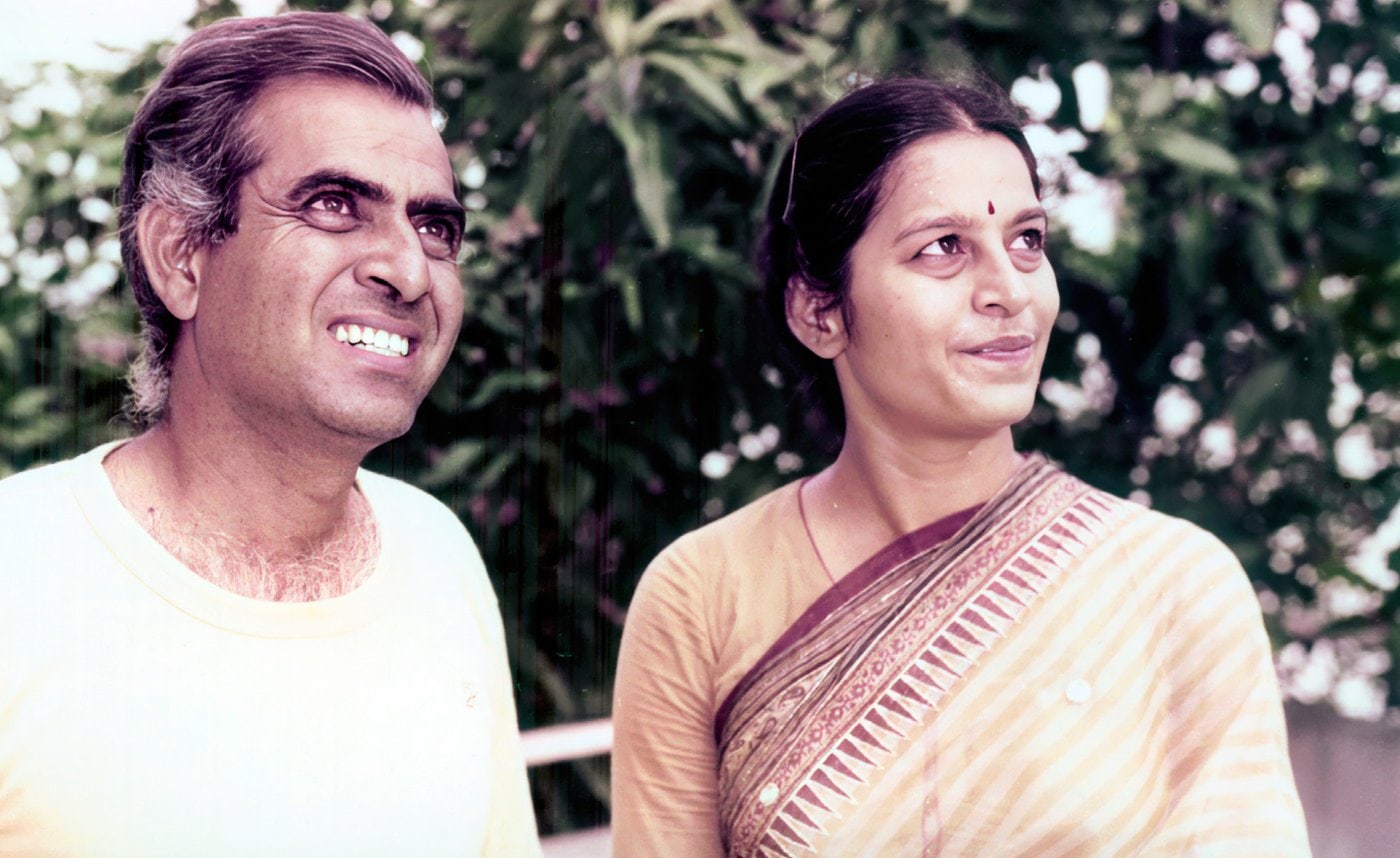
The one whom I had always thought to be eternal and indestructible, our Kake, left the world forever on that ill-fated evening of 7th July 2010. The one who spent his childhood days with the Mother in a walking race, running race or aeroplane race, amongst several other races, had been summoned by the Mother to the playground of heavens, to be a champion there as well!
A child who would pull the Mother’s footrest to sit near her and other times snuggle close to her, resting his head on her lap and sleep cozily during adult classes in the Ashram, was laid to rest in eternal sleep upon this earth to make room for him once again in her vast lap.
Anyone who heard that ‘Kake is no more’, was stunned as if hit by a sledgehammer. How could one believe that the very person who had a routine day of usual work followed by a tennis match that afternoon, packed his bag and baggage and departed that very evening? Did he have a premonition? It seemed that he did, since the preparations for the journey had long been underway. May be he had a plan before the crossover for he had not only completed all the pending paperwork but also had his house painted and refurbished, leaving it sparkly.
The words ‘mast maula’ (happy-go-lucky) and ‘harfan maula’ (multifaceted) fit him perfectly as he was a person who lived life to the fullest, with an out-of-the-box approach, a worthy example for all to emulate. Most popular with the students and a favourite group captain of physical education, Kake stood out as a cherished star. Alas, a star that perished much too soon like a comet with myriads of colours.
As for me, he was a friend, philosopher, guide, companion, and much more, all rolled into one.
Along with a few others, he initiated the ‘Free Progress System’ where a student not only chose his subject and teacher but also made his own daily timetable! Learning happened without pressure and the students enjoyed a stress-free education.
One could arrive at the school before school hours to find Kake and the children already there. While a student was busy doing maths amidst the melodious tunes of a flute played by another, on another side piano notes could be heard as some student sat for practice. Each child was engaged in something different and then there was Kake, watching over them all.
After 11.30 when the school ended, the post lunch session shifted to Kake’s home where the scene one would witness was quite something beyond words. The student group would be engrossed in a variety of stuff: from learning computers to a game of chess, from watch repairing to learning French poetry by heart. One child would be seen enjoying a nap on the bed while in another room several sat with their heads together wrestling over to solve a 5000 piece jigsaw puzzle. Every now and then a triumphant shout of ‘hurrah’ would erupt indicating that another matching piece had found its right place in the puzzle.
The air was resplendent with healthy recreation. A broken umbrella was being repaired, a speaker was not working, someone’s laptop needed some fixing up – “Let us go to Kake’s house.” Every problem found a solution there. Kake’s house was not just a repair workshop. Household problems, petty quarrels between brothers and sisters, personal issues and any other difficulties, Kake was the one person to whom everyone turned to – ‘One size fits all’ Kake, the one who could fix anything under the sun.
A little before 1.30 pm when it was time for them to leave for their classes, Kake would invariably treat them to chocolates, sweets, sharbat or some other snacks. What wonderful days those were! And who could have even imagined in their wildest dream that 6th July 2010 would be the last day of such merriment, and those days were never to come again.
Even as a teacher, Kake remained a lifelong student. If a student wished to learn to repair clocks, Kake would immediately set off to a clockmaker’s shop in Pondicherry, spend time there learning the craft in detail first and then come back to teach the children. When it came to students wanting to learn sewing and stitch their own clothes, he quickly managed to arrange for 2 sewing machines and invited his French friend Jean Louis who was once a famous cloth designer in France to guide them. When the students proudly wore the garments that they had stitched themselves to school it came as no surprise that they found every eye turned towards them.
Kake also looked after the Ashram farm for many years and gained considerable knowledge in the field of agriculture as well. During the early days of Auroville, he worked tirelessly there too, helping level the land and to build roads. In short, wherever there was a need in the ashram, Kake would offer his service wholeheartedly without any reserve.
As a captain of Physical Education, it would be difficult to find another like him. He would make children run numerous laps around the athletics track or announce that they would complete 100 laps of the swimming pool. The children would glare at him mutinously in silence, but Kake, mysteriously would not ‘see or hear’ them at that point and remained expressionless, leaving them with no choice but to do it. After all that sweat and effort, their joy on their achievement used to be boundless and the next day they would rush to thank Kake for making them do it.
There is another aspect of Kake that is remembered even today, in his approach to sports. Whenever someone twisted an ankle playing basketball, he would urge them not to sit nursing it but to get up, walk, jog slowly and to see how quickly it would improve. If a volleyball happened to strike the finger of a child and it had swollen painfully, his approach would be not to leave it stiff but to move it, to bend it and to work through the pain.
If someone had a fever, he would ask them not to lay in bed feeling sorry for themselves but to go out into the laps of nature where their suffering would vanish. He was of the belief that the more attention and self-pity one lavished on minor ailments and injuries the more strongly they cling on to the person. What a profound truth it is and how simply Kake expressed it.
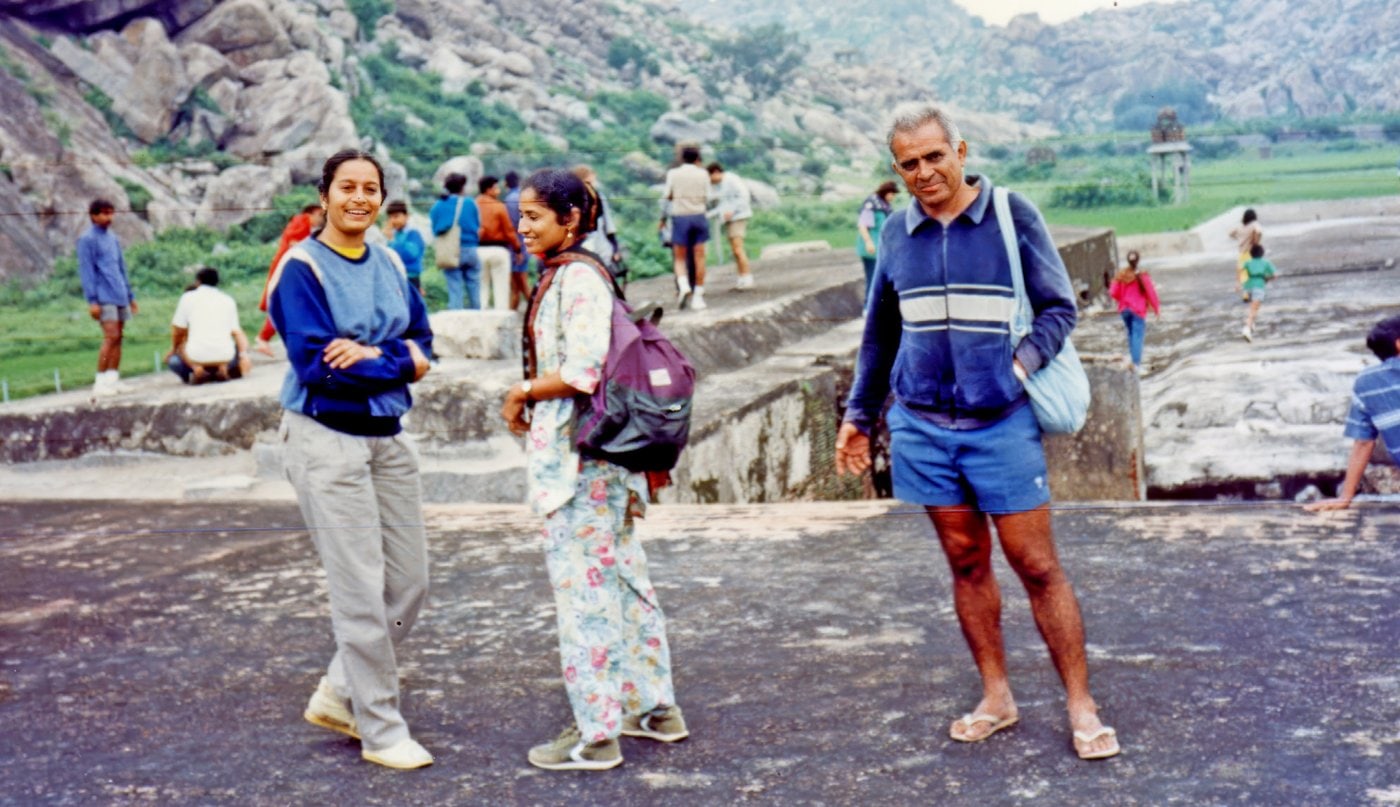
Every year during our annual picnic we would walk from Pondicherry to Gingee which was nearly 80 km away. In the beginning of the walk, the newcomers would be very enthusiastic but after half the distance is covered complaints would start pouring in. The feet, legs, back, neck and even the mind’s resolve would start suffering and that was when Kake would sooth everyone’s discomfort with the balm of love and affection. Kake the healer, would open the ground to songs, followed by jokes and riddles and keep everyone’s spirits soaring with such diversions, helping them traverse the remaining miles to Gingee. The final 3-4 km were indeed exhausting but with a captain like Kake at the fore, numerous children and adults have completed that demanding journey not just once but many times.
Today, even after 16 years of his passing, people still carry their own special memories of the Gingee walk like shining stars within their hearts, where Kake ‘walked’ the talk. I have done it thrice myself and remember those fond memories with a heavy heart.
Another habit of Kake that everyone admired was he used to sleep with the lamb and wake up with the lark. When I asked him “Kake, why do you get up so early?”, his reply would always be the same – “Try it yourself. The day would feel much longer and you can do all your work properly and in peace”. To that I would often reply, “No no. I am not a bird to wake up so early”. Today, every time I wake up early, I remember him and this conversation we had.
Kake is someone who cannot be forgotten and everyone who knew him remember him at every moment. Yet, one question continue to linger in all our hearts – How can someone so happy, ever smiling and a cheerful friend to one and all, be taken by the Mother in such an untimely fashion… But then only a watch repairer knows what is timely and untimely while we can simply watch and watch and watch…
All that I can say is:
Tumhi so gaye dastan kehte kehte…(The world was listening with rapt attention;
it was you who fell asleep while narrating the story…)
To Walk In His Footsteps
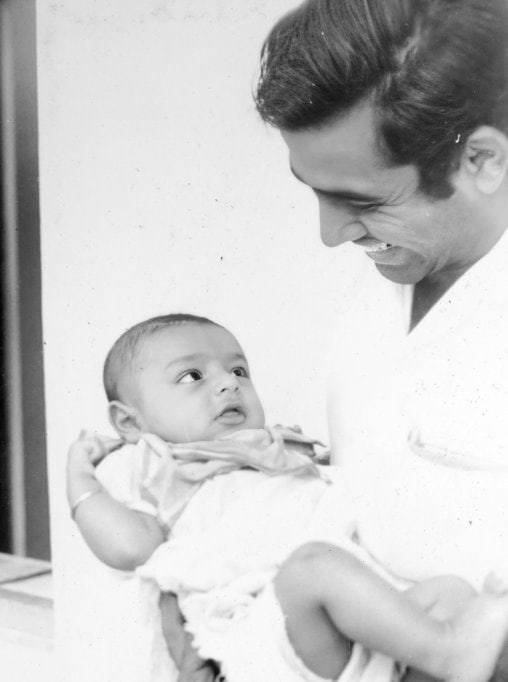
The news of Kake chacha’s death was something that was the most unexpected. The question was whether I should go to Pondy or not. My first reaction was that – why should I go for Kake chacha who had cheated me at the last moment?
But then, one cannot write off all those years that he had been solid as a rock and had been the most dependable person for any problem – help required, advice needed, or encouragement for any work. His unswerving faith in The Mother and the insights he had given me to the philosophy of The Mother and Sri Aurobindo are in themselves enough to make a special place for him in my heart till the end of my days.
The sorrow still does not diminish. After reading so much of Sri Aurobindo and also the Gita, one wonders whether one is actually able to practice it. Why does the equanimity not come in a calamity like this? Is my sorrow a selfish one? Am I mourning the loss of a broad shoulder that was there to cry on? A shoulder that takes the responsibility off everyone? A shoulder that reduces my burden and does so many things that one does not even realise? But why am I complaining to everyone when I have already complained to The Master while sitting in his room this morning?
I am not used to expressing my love to anyone, or even showing my gratefulness to people for all that they do for me. In Kake chacha’s case, I felt that he should have at least given me a chance to say all the things that I should have been saying. That would not have reduced my grief. It would probably have been better had I not loved him so much. But all those people who knew him will also know that it was not possible to not love Kake chacha. If Mother did not want us to love him, she would not have made him the way she did.
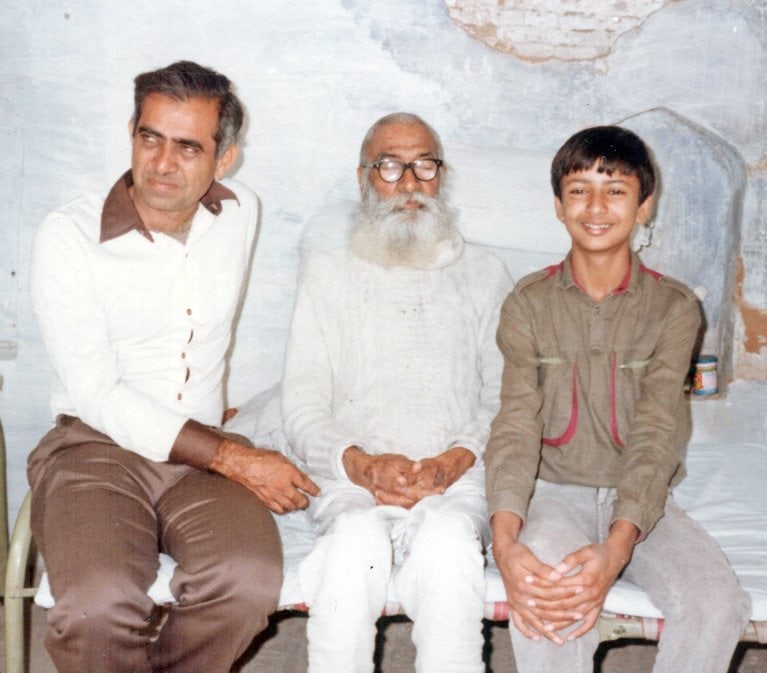
Kake Chacha’s unswerving faith in the Mother and the insights he had given me to the philosophy of the Mother and Sri Aurobindo are in themselves enough to make a special place for him in my heart, till the end of my days…. In the post-cyclone period when I would visit the coastal areas of Odisha for reconstruction of school buildings, Kake chacha joined me twice. His being there gave a different direction to the whole experience. He would get into the educational aspect, the aim of the school and the sadhana that one has to do. Even on a trip when comforts and luxury were at arm’s length, the possibility of moving his arm towards them never occurred to him. However, he would take care of other people’s comfort.
In 2001, we were in Cuttack and were to travel to Katni to attend Basant. We decided to take an overnight train to Sambalpur and change trains there. I would normally travel by sleeper class, but this time I had booked by third AC. Kake chacha was quite upset about it and wanted to change. I found out that there were no seats in the train and told him that we had no option. I had gone out for work and when I returned, I was told that our ticket has been cancelled and we have got wait-listed sleeper tickets. Someone had assured us that we would get the tickets confirmed. However the tickets did not get confirmed. When we got onto the train, to our dismay, there were no seats available and the floor space between the seats was also occupied. I thought that we would have to stand and travel.
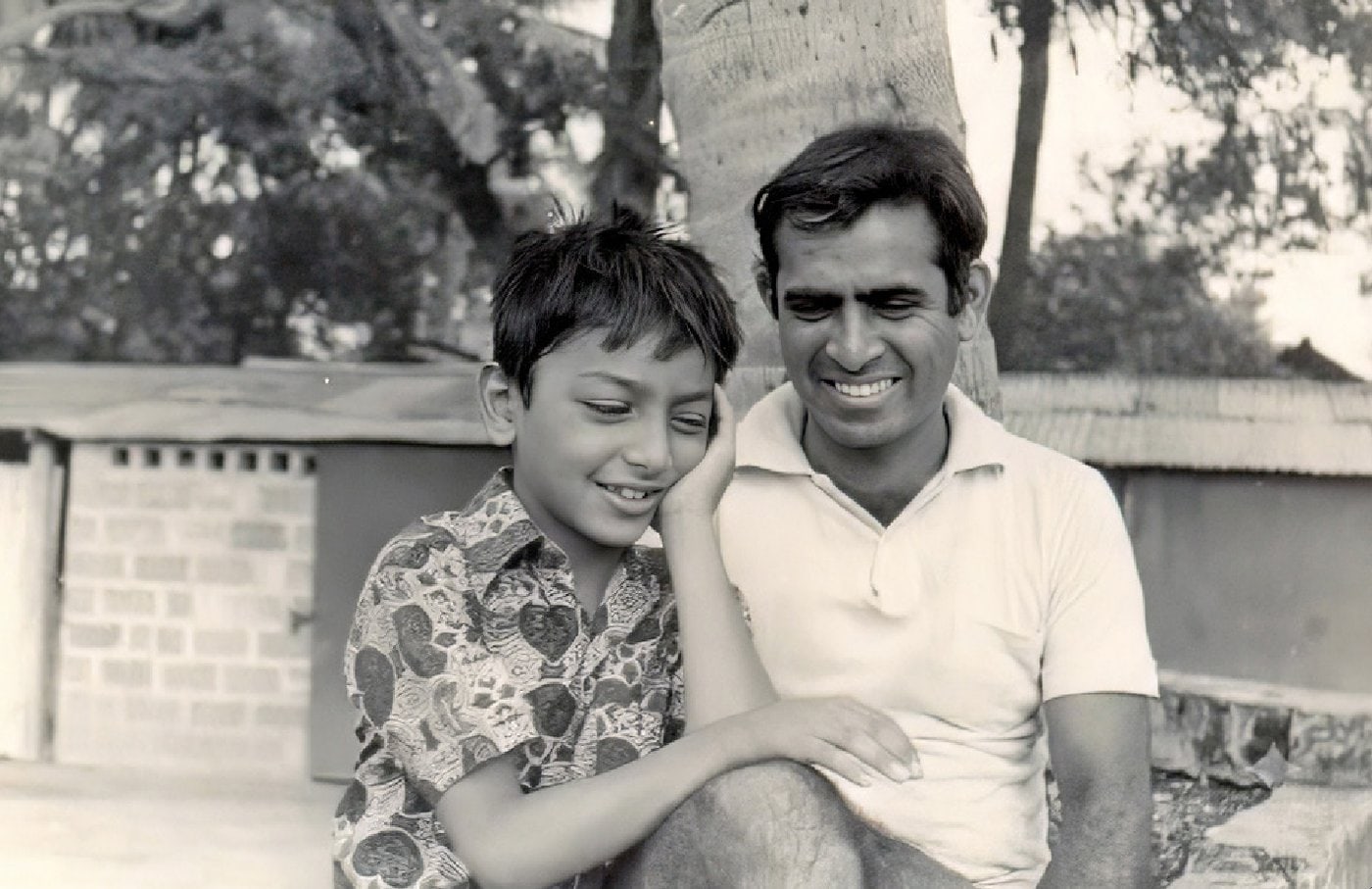
But Kake chacha found a seat under which there was no luggage. We requested the person sleeping on the floor to give us some space to slide under the seat. Kake chacha first slid in and then I went in. I was half in and half out. When he wanted to go to the toilet, I had to push the person on the floor, move out myself and then he could come out. I did not mind traveling in this fashion, but what I found hilarious was that we had given up confirmed seats in an AC coach, for which we got only half the refund and were traveling in this fashion.
Kake chacha was always before time in everything. He slept at 8 p.m., woke at 3 a.m., breakfast at 4 a.m., lunch around 10, etc. I appreciated it. But how can one appreciate his being before time this once?
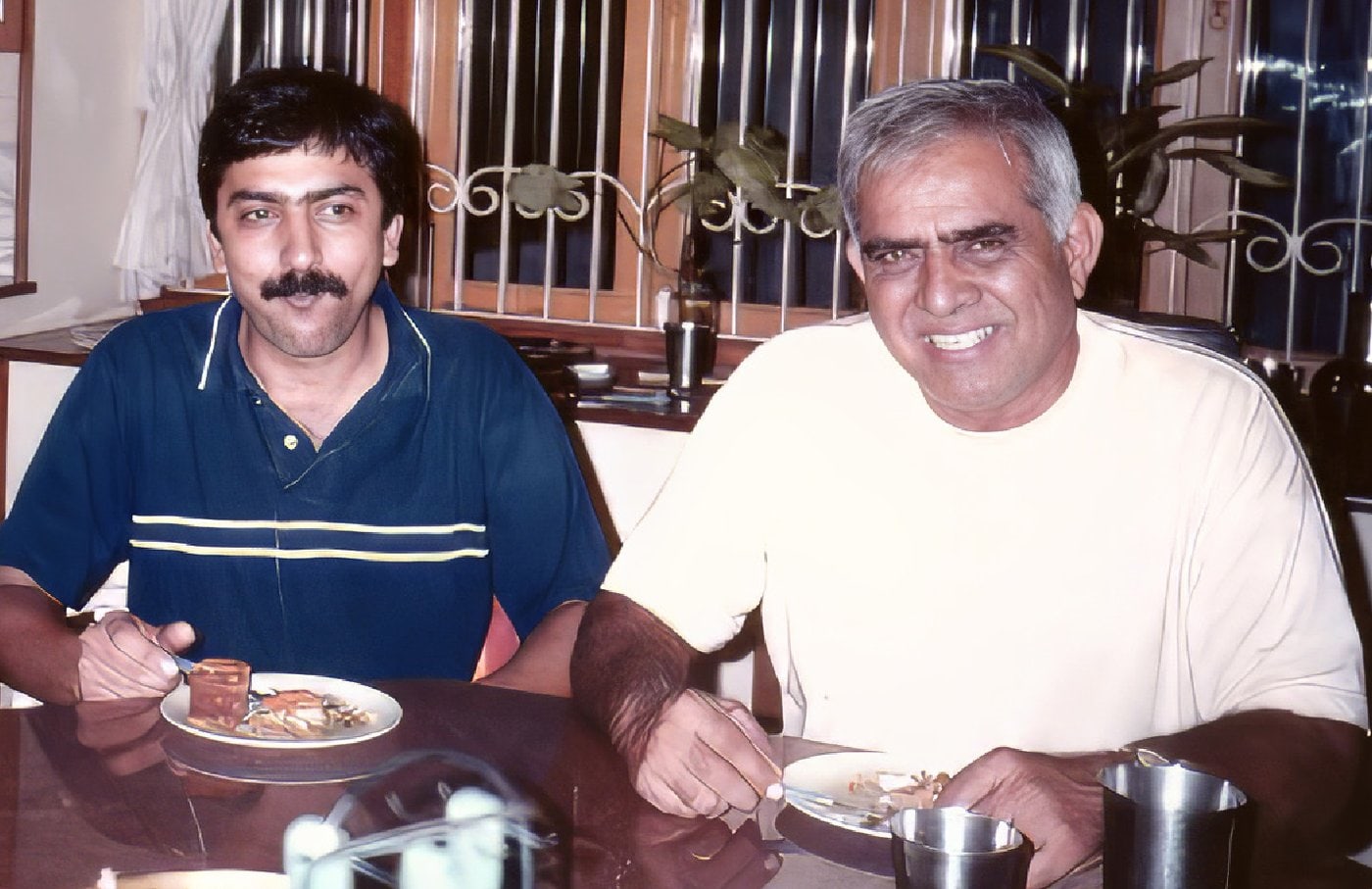
He died of a heart problem – a heart that went out to everyone, bled for everyone. A heart that was so big that it could accommodate lots of people and take everyone’s problems. A heart that was oozing with love for humanity at large. He had a socialist bent, and we had discussed and argued on many social issues and issues touching humanity at large over the years. I must admit that very often I did not agree with him at that time, but in most cases, I saw his point later – sometimes years later.
The standards set by him are very high. Will we be able to match them? The ideal he was living with was too pure. Is it possible for us to walk in his footsteps?
Kake chacha’s loss was not a family loss. The multitude of people who came, phoned, sent SMSes and mails only reinforced what we already knew. I am very grateful to everyone for being there to share this loss.
Dear Kake Chacha
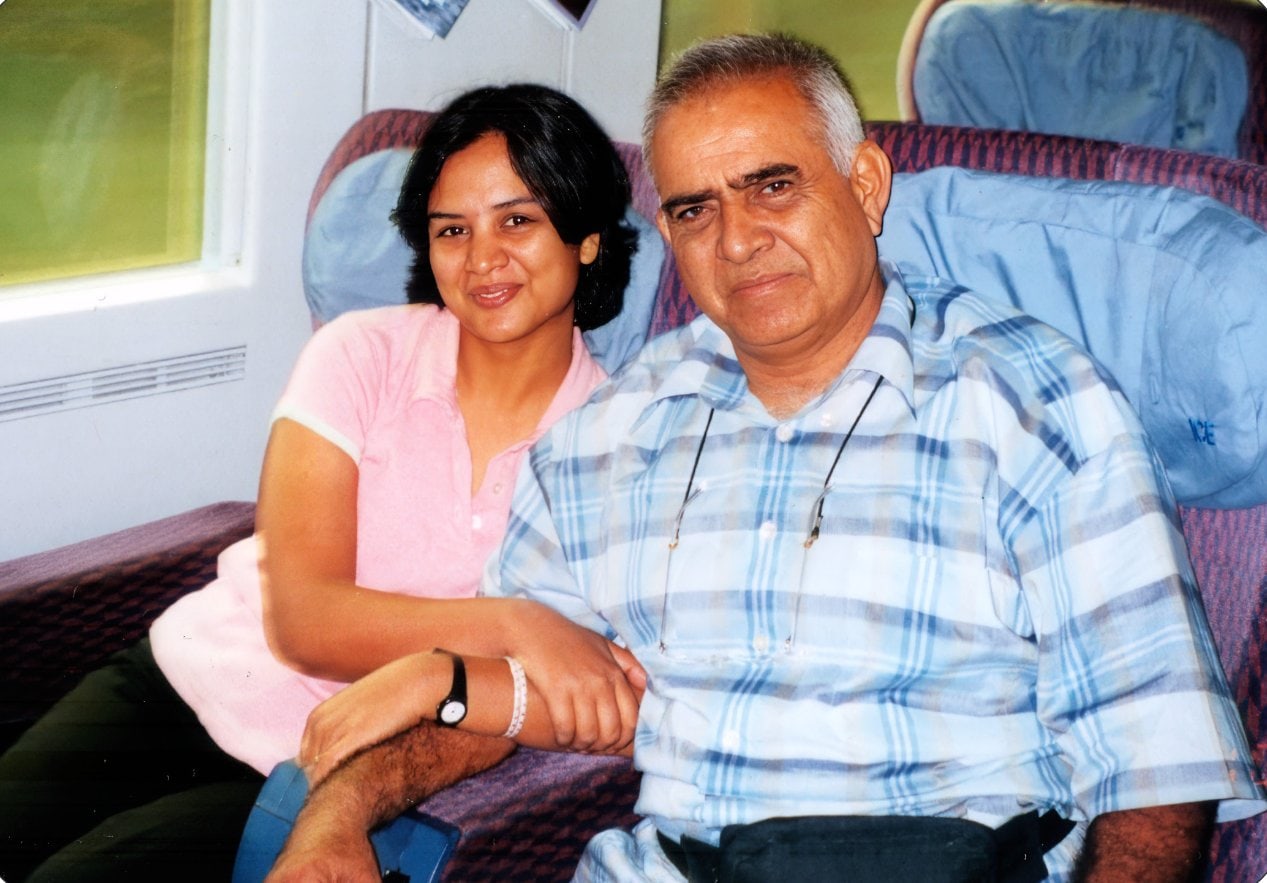
You left without a proper goodbye, and for the longest time, it felt impossible to accept. It was sudden, unbelievable, and deeply heartbreaking. What made it harder was that grief felt so private – as if I was carrying my own piece of it, quietly, without knowing how and whom to share it with. Even after all these years, sometimes it feels as though you might walk into the room any minute with that familiar voice and easy laugh.
Daya Niwas and Pondicherry have never quite been the same for me since you left. The house misses you – your loud, resonating voice travelling across floors, your presence filling every room without effort, and those endless streams of students, friends, and well-wishers dropping in, often unannounced, as if the house itself revolved around you. Those afternoons had a life of their own – conversations, debates, laughter, and for me, stolen moments with jhaalmuri in the middle of it all. Looking back, I realise it was never just the food or the gathering; it was the warmth you created around you so naturally.
You were the very first person to welcome me into the Jauhar family with complete openness – not merely as someone’s wife or daughter-in-law, but as me, an individual. That is a rare gift, and I felt so special. In a family as layered and rich as ours, that kind of acceptance stays with a person forever.
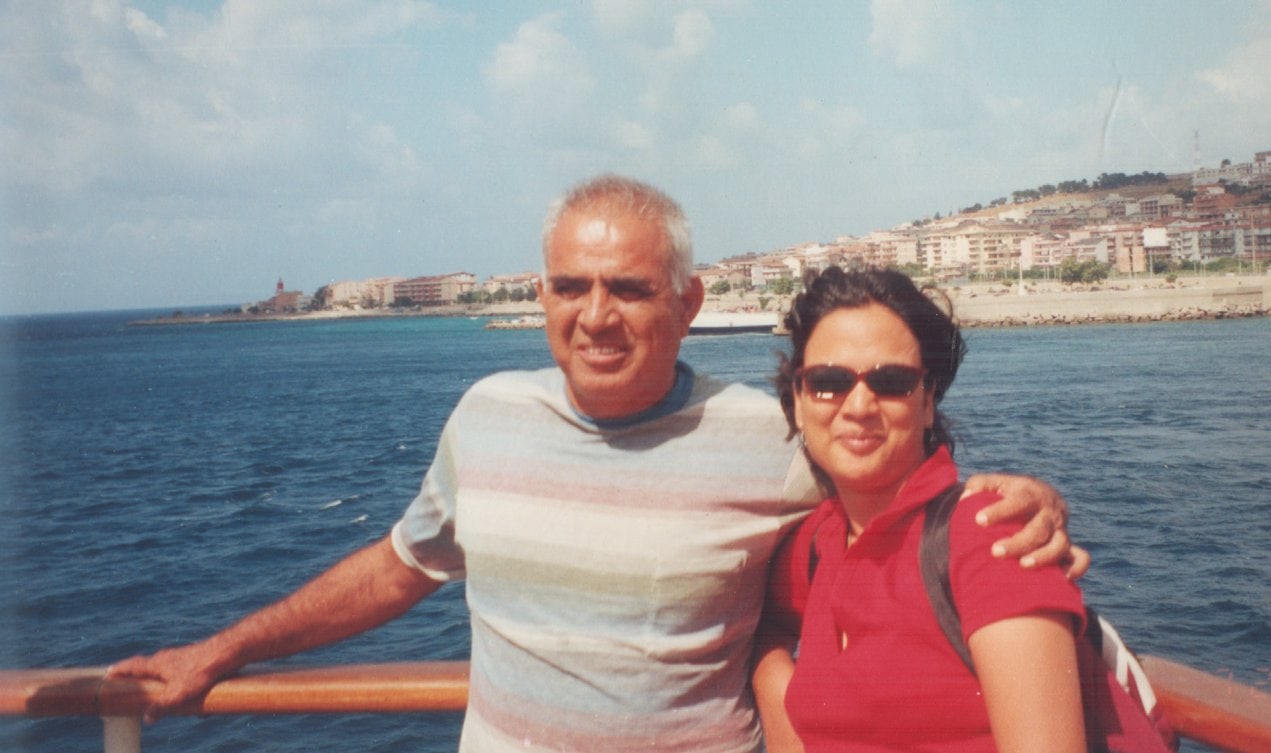
And my God, Chacha – how shocked I used to be at your completely matter-of-fact, serious conversations on topics that most people would lower their voices for, avoid entirely, or pretend did not exist! You had this extraordinary ability to speak of ‘taboo’ things with such simplicity and honesty that you left everyone else looking unnecessarily complicated. I am quite sure you know exactly what I mean – and I can almost hear you laughing as I write this.
When I think of what you left behind for me to carry forward, it is not one grand lesson, but many small ones stitched together by the way you lived. Your childlike curiosity, your simplicity, and your complete lack of pretence stand out the most. You asked questions freely, without ego. You called out nonsense immediately, without diplomacy. And if someone was stupid, lazy, or half-hearted – especially if I was being that way – you did not hesitate to say so. At the time, it could be mildly embarrassing for me; now, I realise it was one of your purest forms of love.
And then there was Europe – what a trip that was. Honestly, it should have come with a handbook titled Travelling with Kake Chacha: A Masterclass in Frugality and Discipline. You approached every place, every experience, every meal, and every expense with equal parts wonder and restraint – admiring everything deeply, but never letting it own you. It was fascinating to watch. You taught me that it is possible to experience the world fully and still remain grounded, practical, and utterly yourself.
You left behind much more than memories; you left behind a way of being – lighter, clearer, simpler, and truer. And in a world that often feels heavy and performative, that feels like a gift of immense value.
Kake Chacha, you are missed. Deeply. But you are also remembered – warmly, vividly, and often with a smile.
Kake-tauji

They say my smile is like his. The child who had the brazen, – yet nevertheless endearing – audacity to challenge Douce Mère to an aeroplane and rabbit race, lived through life with that smile. Therefore, when I am told that the Cheshire cat grin and the crinkly eyes are a familial trait I’ve inherited from my uncle, I take it as an immense compliment; an implied compliment, which I sometimes think I may not deserve entirely. I wish I were more like him.
Such simplicity, selflessness, courage, understanding, love, and a perfectly unique and wonderful brand of eccentricity I have scarcely seen rolled up into one person, who was nevertheless, so much more than the sum of his parts. That sum added up to an impossible number, which was expressible in no other terms but Kake-tauji. I appreciated his qualities even when he was with us, and are not a figment of the imagination rendered delirious by loss, which views things through the stained glass of sorrow. Now they come back to me with a new tenderness as memories of a childhood and youth spent with Kake-tauji, moments I will always cherish as some of my closest and fondest.
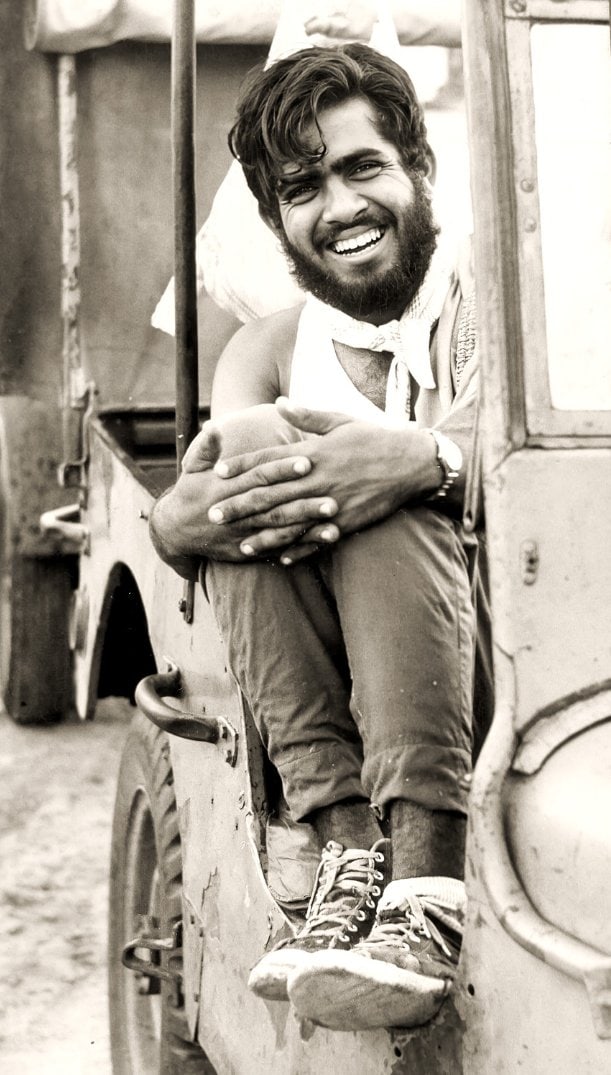
When I was little I spent hours with him in his room playing games that ranged from puzzles, to sliding around on the slippery floor in his bathroom, to gazing agog at his wonderful collection of little curios, even to the outrageous magic show that involved making little objects disappear in the dense growth of his incredibly hairy chest. There were of course the customary snack breaks in which I was treated to goodies kept especially for me. “Bas Khatam?” I would exclaim, with a touch of nostalgia at the end of these sessions.
However, my all time favourite was his Tintin collection. I could spend hours gazing at the attractive illustrations while he patiently recounted the stories to a child who had a reputation for asking too many questions, most of which were uncannily irrelevant. I eyed that collection with such greed and dropped broad hints as to my propensities with such blissful disregard to propriety that he gifted the entire set to me, over a period of several birthdays. In retrospect I realize with a sudden pang that he was generous, almost to a fault. Going through his personal belongings now I notice how very little he owned for his own possession or enjoyment.
Indulgent he may have been, but he wasn’t the stereotypical uncle who provided a convenient escape from the regimental rule of Mama and Papa. He could be the strict disciplinarian too, when required. When I just began speaking and before I came to know him as Kake-tauji, he was ‘Kaketauno’ to me: a concocted appellation which consisted of the name I was supposed to call him and a suffix which was the word I heard most often from him – ‘No’.
Kake-tauji the martinet was nowhere harsher than on himself in the regulation of his daily routine. His inflexible and somewhat ludicrous food and sleep timings were a joke among family and friends. I sometimes asked him, “Kake-tauji, how can you possibly get sleep at 8 pm?” To which he would answer, “I like it,” with a self-explanatory smile. Morning was his time though. On my birthdays, when I would go out earlier than was customary, he was the first one I met on my way to the Ashram. It was always the firm hug, the priceless smile, and a gruff, “Bonne-fête!” But the love was tangible; we never spoke about it but I knew he was immensely fond of me, and he knew I adored him.
His attitude towards ailments and physical pain was another point of great eccentricity, though in the end, it proved to be his undoing. Nevertheless, it was commonly known that if you had a fever, or a twisted ankle, it was better to keep mum about it in his presence, lest a few laps round the track were prescribed for the former, and a session of his own unique brand of excruciating massage therapy was immediately administered for the latter. And yet, when I lay abed with a fever or a twisted ankle – and there were more than a few every year – he was the one who invariably visited me, with Vandana-masi. And despite the customary advice of jogging treatment or the threat of a massage, I saw deep concern, affection and love. In every walk of life his attempts to dissemble his true feelings by hardiness and gruffness were betrayed by the simplicity and spontaneity of his acts of goodness and love.
As I got older we grew to be very good friends and, as strict as he was with me in childhood, he became increasingly permissive – as far as he could be – as far as I was concerned. This may have been partly due to the fact that he was a stalwart of the Free Progress System of education – not merely academic education but an education in the classroom of life. I’ve had many intellectually stimulating discussions with him on the subject – and indeed on every other subject, philosophical, or otherwise – with some heartfelt agreements, but also with striking differences of opinion. But what always struck me was the maturity of his insight and his acuity for understanding human nature. And it seemed to spring from a kind of intellectual intuition which rested on the firm basis of an unshakeable faith in the Mother and Sri Aurobindo and their words, and which was so much in contrast with my own clinically analytic and arrogant intellect.
It is thanks to him that I was inducted into the Free Progress system in School at all. Given my history as a disruptive influence on classes, and a reputation of some notoriety in teacher circles, it seemed very unlikely indeed that my teachers would risk letting me loose, quite literally, in the Free Progress system. They were, however, lenient enough to give me a chance, provided Kake-tauji would take full responsibility for my studies and behaviour thenceforward. He accepted the challenge gladly, and the three years that followed have proved to be some of the most important and formative of my life till now. They also changed somewhat the dynamics of the relationship between us, as Kake-tauji, in addition to being the uncle he had always been – and continued to be – became something of a mentor, and a father-figure.
During the first of these three years, the sudden passing away of my father – uncannily similar in many respects to Kake-tauji’s own – left me devastated, shattered, utterly disconsolate. At fifteen, too old to forget about it as a painfully surreal dream, yet too young to quite come to grips with the enormity of my loss, I risked spiralling into severe depression. I would have too, had it not been for Kake-tauji. He forced me to school the very day after my father’s passing, to resume my routine in general; a somewhat cruel act, I thought at the time. Yet I felt, almost, he wept within, as I wept openly. God knows how deeply he must have suffered at the loss of his little brother; but he never broke down; he couldn’t: for me, for all of us. He was the rock upon which we slowly rebuilt our lives. I was profoundly grateful to him for all that he had been to me, done for me, and there were many occasions when I wanted to thank him, and just simply tell him how much he meant to me. It is a gratitude that has gone unexpressed, and it is something I shall always regret.
His emotional resilience and sunny optimism have left an indelible impression on my life. And now if I can find the strength to deal with his loss, it is only thanks to him. I will miss him for lunch on Tuesdays, for a smile and a wave as I had got from him so often as I passed him on the street, for gentle chidings on my late-coming, for the basketball tournaments we played as team-mates, for the way he pottered around everywhere barefooted, for so many other everyday inconsequential things that render my vision temporarily hazy as I remember them….
He may be gone, but he will live through the memories of all whose lives he had touched with a little sunshine, a little love, a little simple happiness and giving. To me it is the loss of an uncle, a mentor, a father, the one person I trusted most in my life. And yet I must smile; smile as he would have wanted me to smile; smile selflessly so others may smile; smile for all that’s left in life to smile for; smile for him because he is, at last, back with his Mother; smile his smile.
Kake-tauji

Kake Tauji was truly one of a kind. There was an authenticity about him that was unique – an endearing mix of simplicity, eccentricity, generosity, and humor – that left an impression that is hard to put into words, but impossible to forget. He had a way of living life that left a deep impression on everyone who crossed his path. His smile was infectious, his presence comforting, and his absence now feels deeply personal.
He was, at his core, a people’s person – always approachable, always willing to help. No matter how busy he might have been, he made time. I knew I could always rely on him when I needed guidance. Whether it was navigating relationship problems or venting my frustrations about a boarding didi or teacher, Kake Tauji was always dependable. He listened – really listened – without judgment, without interruption, and responded with patience. His advice was never imposed, only gently offered, and always thoughtful.
His home reflected that same openness, and for me, it was always a happy place. It wasn’t just his space – it felt like an extension of the Ashram school. Children were always welcome, whether it was for help with homework, access to the computer, or simply a safe place to spend time. There was such a sense of ease and belonging in that space. I remember going there just to hang out with him – watching TV, napping on his cool floor, and enjoying the snacks he would keep aside for us, which Dolly Masi would lovingly distribute. He gave his time and attention so freely – it spoke volumes about the size of his heart and his quiet dedication as a teacher.
And then there was his very distinctive way of ‘taking care’ of you. I still remember the time I dislocated my finger playing hockey and had to go through his famously excruciating therapy – an experience I’m sure many can relate to! And yet, in his own way, he also knew how to indulge, remembering the little things, like my favorite ice cream, and treating me to it. That contrast – firm yet affectionate – was so much a part of who he was.
He was the first to welcome me with warmth and open arms – and that feeling of being loved so effortlessly will always stay with me. I deeply cherish the time Sujay and I got to spend with him and Dolly Masi. Those moments – simple, warm, and filled with ease – are the ones I hold especially close. I always felt that he gave me a special place in his heart, perhaps because of how much Sujay meant to him. Over time, that warmth turned into something deeper – he became a mentor, a confidant, and truly the kind of uncle I had always wished for. I feel incredibly lucky to have known him as Kake Tauji.
Recollections
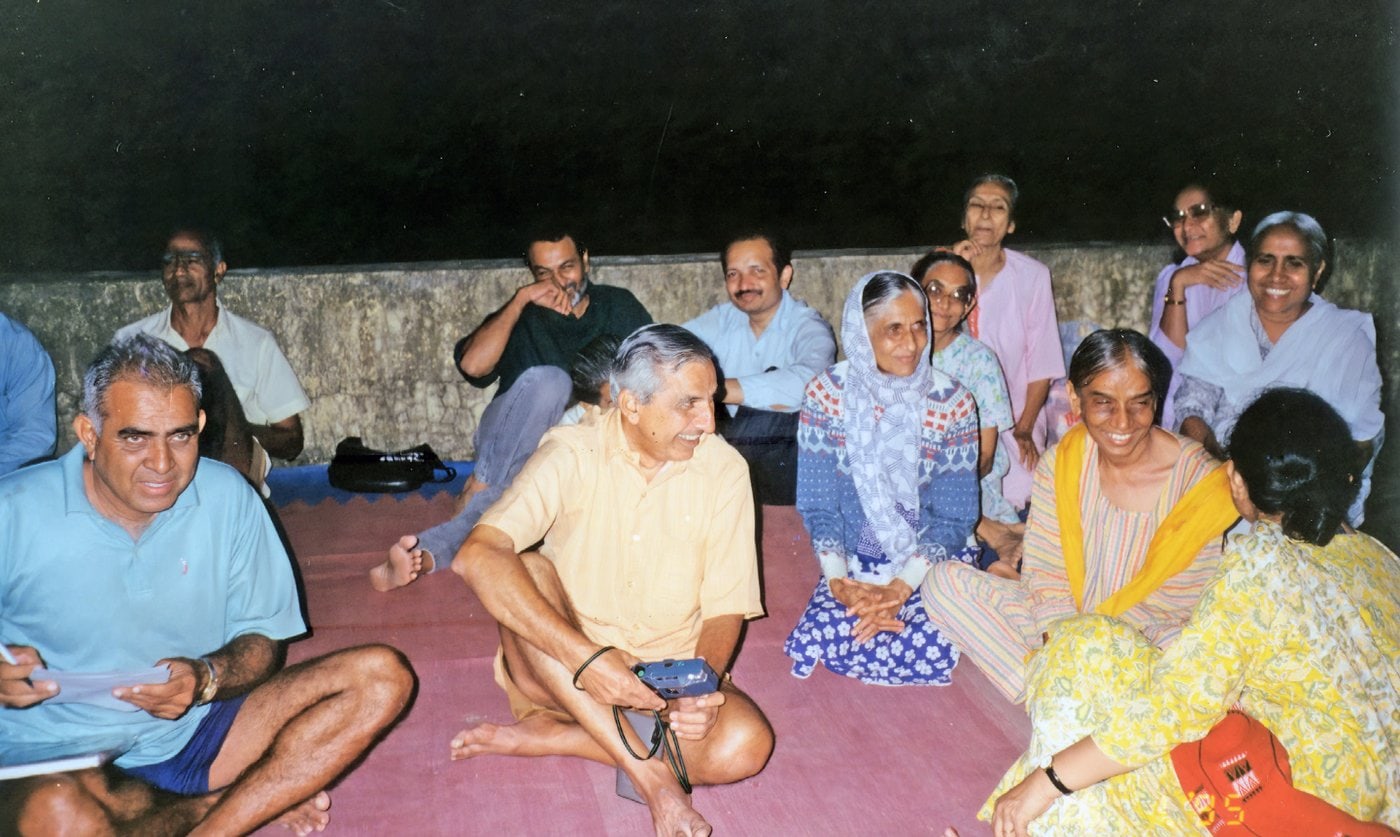
Our class of Natural Science often went to Ashram gardens or other nearby places for study. We had to inform the Mother through Pavitra-da by writing the names of students, the time of departure and that of our return. At times the Mother answered orally but sometimes she signed the letter and even wrote ‘Blessing’. Occasionally Aniruddha or Richard accompanied us.
Once we went to Maret Garden. We used to call it Atol-da’s Garden because he was the in-charge and stayed there too. He always gave tender coconuts to all of us.
Once he was in a fix, since he had no worker to pluck the coconuts. Kake then barely thirteen years old, on his own initiative climbed the tree and plucked coconuts for all of us. We were all overjoyed.
Golden Chain
May–Aug 2012
Man with A Permanent Smile
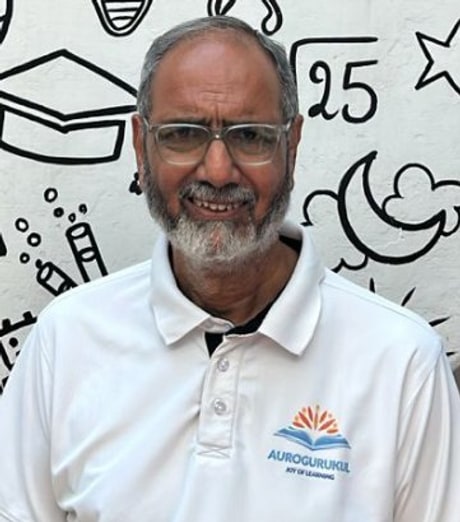
I never saw a frown on Kake’s face. In fact you could not frown for long if you were in his company. Despite the fact that you were frowning at him, he kept smiling at you. Kake had his own interesting ways of doing things. However strange they might have been, when you recollect them you can’t help but smile.
His company or his stories could never bore anyone. Here are two interesting incidents with Kake which I still recollect:
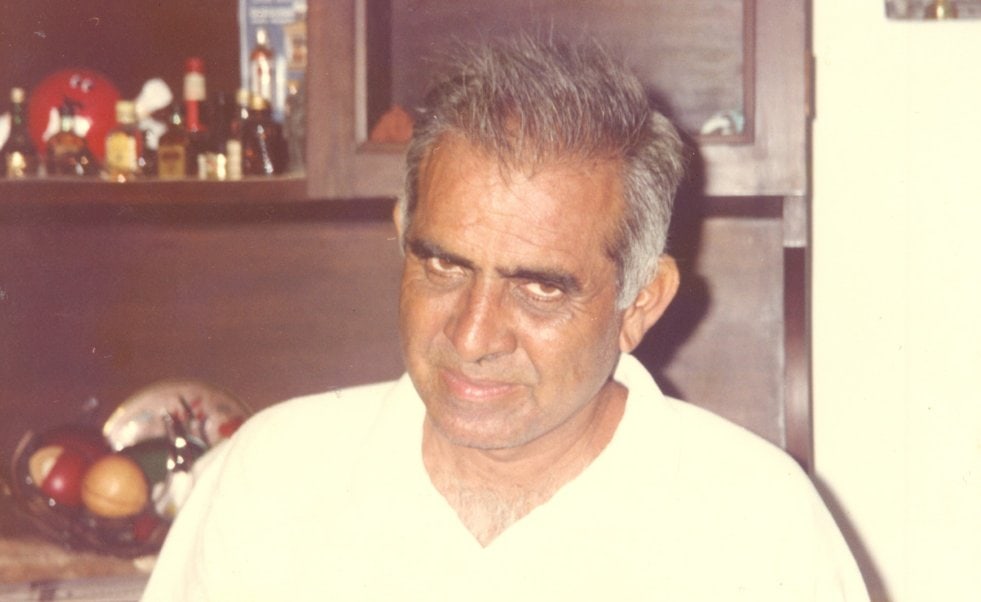
1) He was in charge of Nandanam Orchard where there were a lot of mango trees. Interestingly, in the Ashram, mango stealing has been very much a part of many a student’s life. Kake knew this so he made an innovative rule for Nandanam: No stealing of mangoes but anyone who wanted to eat could sit on the tree and eat as many as he/she wanted.
2) One year during the men’s games competition season we were having a hockey match. Kake was playing right out and I was the centre. I dribbled past one or two players and passed to Kake at right out. To my surprise Kake was not there in his position! He was somewhere around the goal-keeper. Annoyed, I asked him what he was up to. He calmly replied, “Mangal I was creating confusion”. Little did he realise that he was not confusing his opponents but rather his own team.
His leaving us was too sudden and unexpected. The Gods must be weeping having realised their mistake and I’m sure Kake must be smiling at the fact that Gods too once in a while make mistakes like us humans. Whatever Kake’s ways and means he was one person who, even if you met him once, would leave an everlasting impression on you.
The Quintessential Sadhak
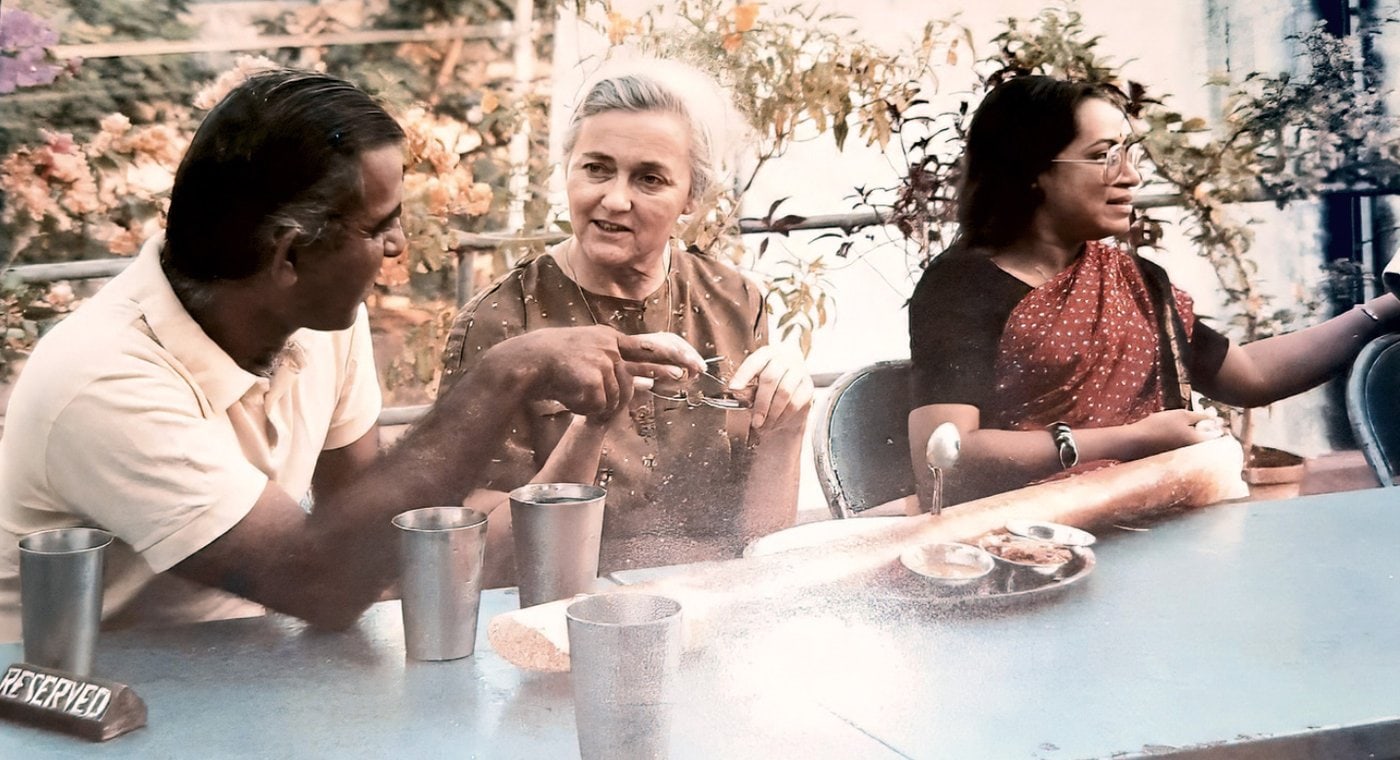
My daughter Ahana broke the news of Kake’s passing away as gently as possible. Nonetheless we were emotionally shattered on receiving the news. It was hard to believe that we wouldn’t see Kake’s infectious smiling eyes on our future visits to Pondy. I still remember how he used to boast light-heartedly that he has ‘golden eyes’ not brown ones.
My earliest memory of Kake was when I heard that somebody called Promesse had got the ‘Sports Star’ in 1967. I was a simpering starry-eyed newcomer to SAICE. Kake seemed like a demi-god who had achieved the highest honour. Back then I had never believed that I would ever be associated with someone who had attained that level of perfection.
I came to know Kake when he taught us Chemistry in E.A.V.P.1 As far as I can remember there were around 10 girls in this class with 2 teachers teaching two different subjects. While Kake taught Chemistry to the wise ones, Sharda was the popular teacher of the others. Those were the days! Later in the B2 group activities, I found Kake to be an extremely sensitive and inspiring coach, be it for gymnastics, athletics or games. Kake’s subtle ways of boosting our sagging spirits never failed to bring out the winner in us. He was ever so tolerant and humorous.
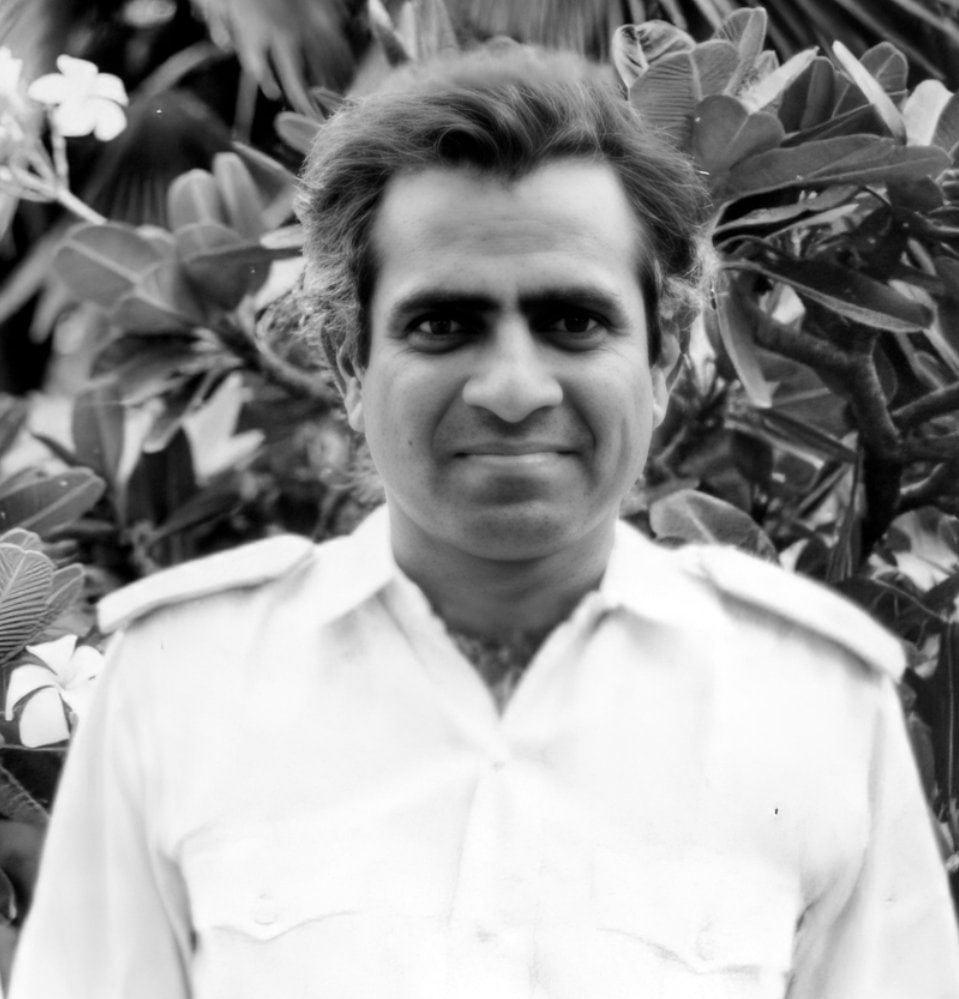
I remember the day I had planned to make ice-cream in a manually operated bucket-shaped ice-cream maker. A huge block (may be weighing 40 kg) of ice was procured for the event. We were waiting for the milk to be supplied so that we could go ahead with the procedure, but the milk was not available. With Kake around, our disappointment was transformed into a whole lot of fun. Kake said that it would be a shame if we allowed that huge block of ice to go waste. So Vilas, Charu, Pinu, Rachita and I took turns to sit on the ice with a sack spread on it and squealed merrily taking joy rides in the verandah of Big Girls Home which was Vilas’s boarding then.
How can I forget the wonderful and sometimes eerie night-outs, on one of which Pinu’s tongue got stuck and she could just repeat Kai-Kai-Kai, trying to call Kake because she thought she had seen a ghost. The hapless soul was an equally terrified fisherman.
The vacations were so much more enjoyable because Kake was either introducing us to the wonderful world of Danny Kaye from Tara’s Music Collection or helping us to fit the pieces of a gigantic jigsaw puzzle in the room of the Guest House where Pinu and Charu used to live. How we used to wait for Tara to open the doors of her room in the Guest House so that we could all pile up and listen to the music records chosen by Kake. Sometimes Kake would try to sing along with the inimitable Danny Kaye. But Kake was no singer, bless his soul. He was much more than a singer. He was a friend, philosopher and a guide.
1 En Avant Vers La Perfection (meaning ‘Forward Towards Perfection’) is the official name of the secondary section at the Sri Aurobindo International Centre of Education (SAICE), located at the Sri Aurobindo Ashram in Puducherry.
Kake, the Good Samaritan
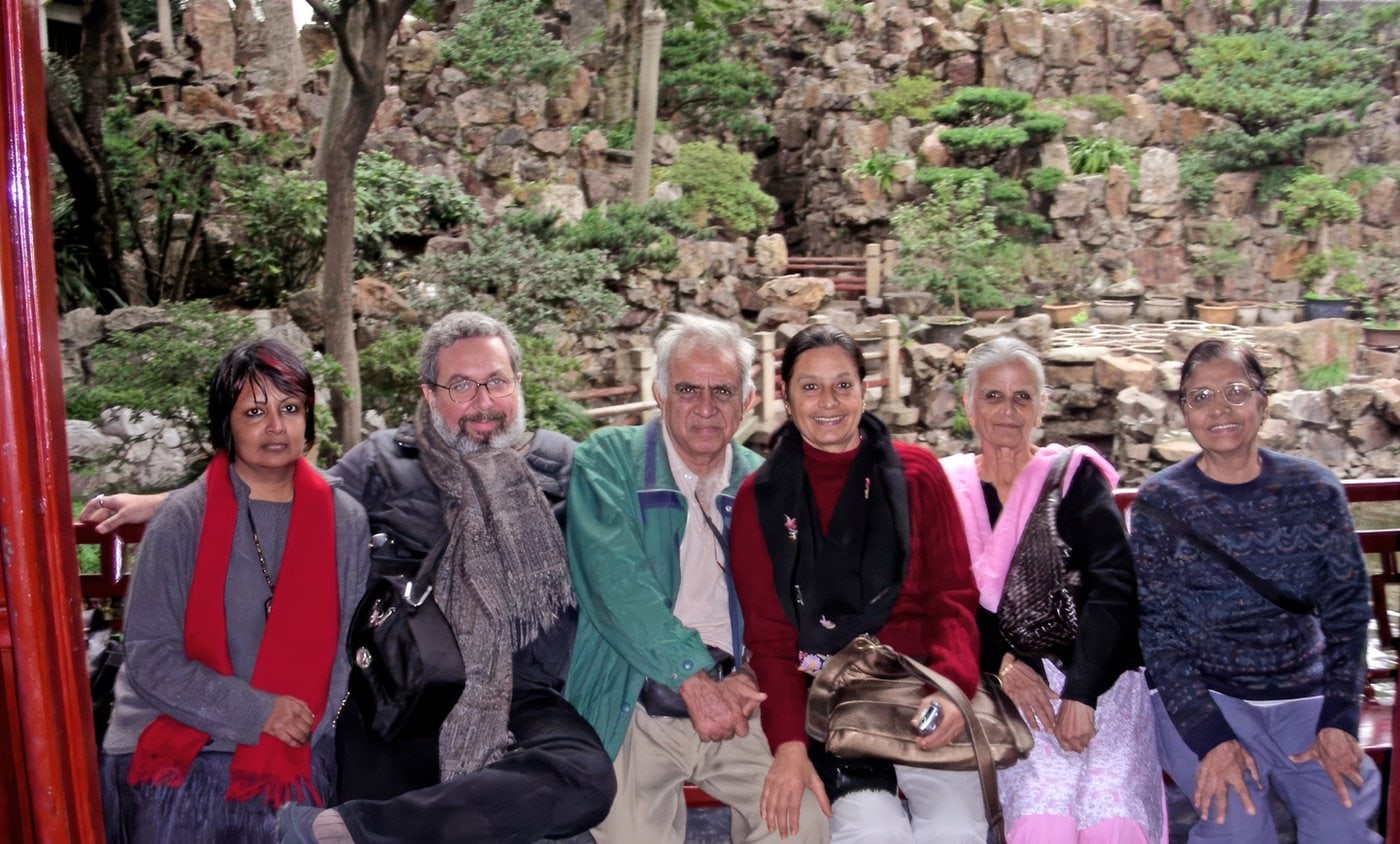
Through the web of small things, we weaved a special friendship. It soared from the mundane of the best glue for plastic to the infinity of eternal knowledge. We shared simple moments of crispy snacks and the secret sight of the raging battle between asuras and the white forces of this transitional age. He understands the cosmic joke of this Leela, and as such, his passing is a non-event. But the form of this lifetime is to be celebrated and studied.
To the best of my knowledge, Kake Da never wrote a book. But his lifetime was in service to the dawning of a supramental age and the growth of humankind. He approached the knowledge of transition with innocence, and from spontaneity he defined the future. He offered life in novel ways – just pointing to the legacy of Sri Aurobindo and the Divine Mother. But he operationalized their knowledge in the fabric of his being and the flow of his life.
I was wondering how we could live in an age of enlightenment, when we are past peak oil, when biodiversity has been ravaged, when water is scarce, and when climate change floods lowlands and dries the Ganges. The supramental force clashes with these harbingers of the apocalypse, forging hope and impossible contradiction. Yet, sitting on a bed, overlooking Pondicherry’s beach, I could understand and look forward to the future. When I watched Kake Da, I felt there was a resolution. I felt there is a path for the world. The gift of the Masters was manifested in his innocence.
In Kake’s life I could see the power of place and contribution. He flowed through the drama of Pondicherry, helping those he could. At moments of challenge he would appear by magic, eliminating impediments, and exuding authority. He would easily make connections to move each person in his circle forward. He might be a source of cheese or resolving a business conflict or understanding the emotional. You could see that he loved to solve a puzzle, help a friend, make a connection. From him I learned how the world of the future would have a stronger sense of place and opportunities for simple contribution.
I watched Kake use such a small set of resources. He personally had a tiny ecological footprint. I would joke that I loved to watch the Ashram’s walk-by because I could see Kake with shoes. His demands on the earth were so small. And he would let nothing go to waste.
He would bring students together to repair broken and discarded computers, bathroom scales, and of course watches. The dual accomplishment of recycling and educating was so attractive that I would say, to ensure that he would enjoy any little gift I brought, that I knew I had to first break the device at least a bit!
In Kake’s hands all things were immortal, and people’s lives transitioned onward in purpose and contribution. Kake showed how earth’s resources could be used with a different attitude and with different objectives.
There is a wave of Indigo children on earth. They are movers in the transitional times. Kake must have been near the start of that wave. While he learned and taught science, math, and technology, he still manifested a playful side. Even in the grim moments that are so essential to life’s drama, there was also the child engaged. He was the glowing child of the Mother.
He was a warrior by nature, as am I. But warriors that can see the joke of the universe and eternally play in that sandbox of stars.
It was a privilege to be with Kake Da as he left his body, expanded, and moved forward – to flow in those waves of bliss. To celebrate his connection with his family, friends, students, and community. I watched him return for a moment, at the touch of his sister. I saw his enduring connection with Vandana and his dear community. There is a gap in our world now that Kake Da has passed. But we have his blessings, his memory, and his lessons – and that will have to be enough.
‘Kake’, The Man of Action
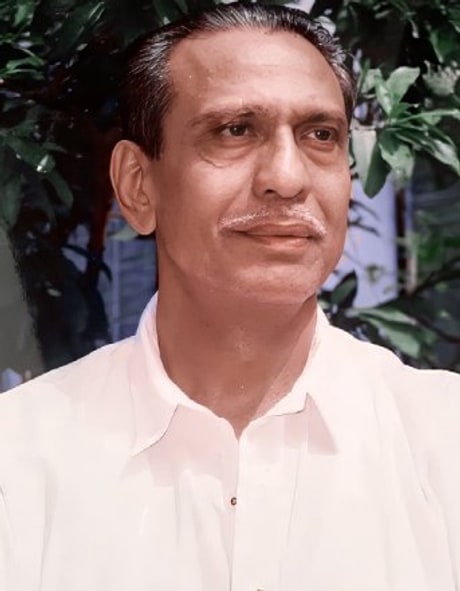
‘Cowards die many times before their deaths. The valiant never taste of death but once.’– Shakespeare
For a man of action, inaction is worse than death. Knowing full well that he was a serious heart patient, that he had a heart operation just a couple of months back, Kake went on with his usual activities as vigorously as before. He was a teacher, a captain. He took active part in playing games; Football, Basketball, Volleyball and Tennis. As though this much was not enough, Kake, along with his students, did multiple other activities; like repairing of watches, radios and other machinery and gadgets. He often went to the market to buy something or other, or visit a shop to give things which he could not repair himself. Students were encouraged to come to his house during their spare time after lunch to do some practical works. He hardly rested the whole day. Ashram inmates and local persons as well as foreigners too came to Kake for some help or other. In fact, the day he left his body, he played a full Tennis match for an hour, then went to the market to catch up with some pending work and there on the road he developed a massive heart attack – and puff! He became totally inactive – forever. Yes, a soldier prefers to die on a battlefield rather than in the comfort of a cosy bed.
That was Kake, a super-active man. He was an all-round person, a jack of all trades. Name any subject, any activity – and it interested him. He bubbled with zeal that was infectious. Students and people around him were inspired by his presence. He spread the joy of living all around him, and radiated a pleasant, happy personality; always laughing, joking and happy. If asked for any help, he was ever-ready to comply. No one was refused a lift on his motorbike.
On the grueling walks to Gingee it was Kake’s enthusiastic encouragement that instilled in the hearts of walkers courage and strength to go on walking till the end, though the whole body would cry with pain. His constant talking and singing kept boredom and sleepiness at bay, for at a certain period of time during the walk one feels terribly drowsy due to extreme fatigue.
Kake’s leadership qualities shone out best when he led the walkers to climb the hills, Napoleon or Beret. It was the confidence he breathed into the climbers that encouraged them to manipulate a difficult situation or hazard a dangerous climb, where one false step and one would slip down a deep gorge.
Kake was the Master of the Rules of Games, all games. Whenever a dispute arose during a game, any game, the two concerned parties would consult him. His interpretation of the rule for that particular game would be final. Both the teams had to accept it with grace. Once a Kabbaddi match was in progress. As usual, a dispute arose concerning the specific rule of the game. The teams could not come to an agreeable solution. So the members of both teams approached Kake for some clarification. Kake at once blurted out, “There are two interpretations of the game; one Indian and the other Western, which one do you want for clarification?” All those who heard his comment burst out in hearty laughter.
Kake had his own theories. Our coaches always advised us to do warming up before and after any sports activities. Kake did not agree with this advice. He would say, “You must always remain warmed up” and would add with a mischievous smile, “If you find a thief is robbing you, will you start warming up allowing him to run away with your stolen valuables?”
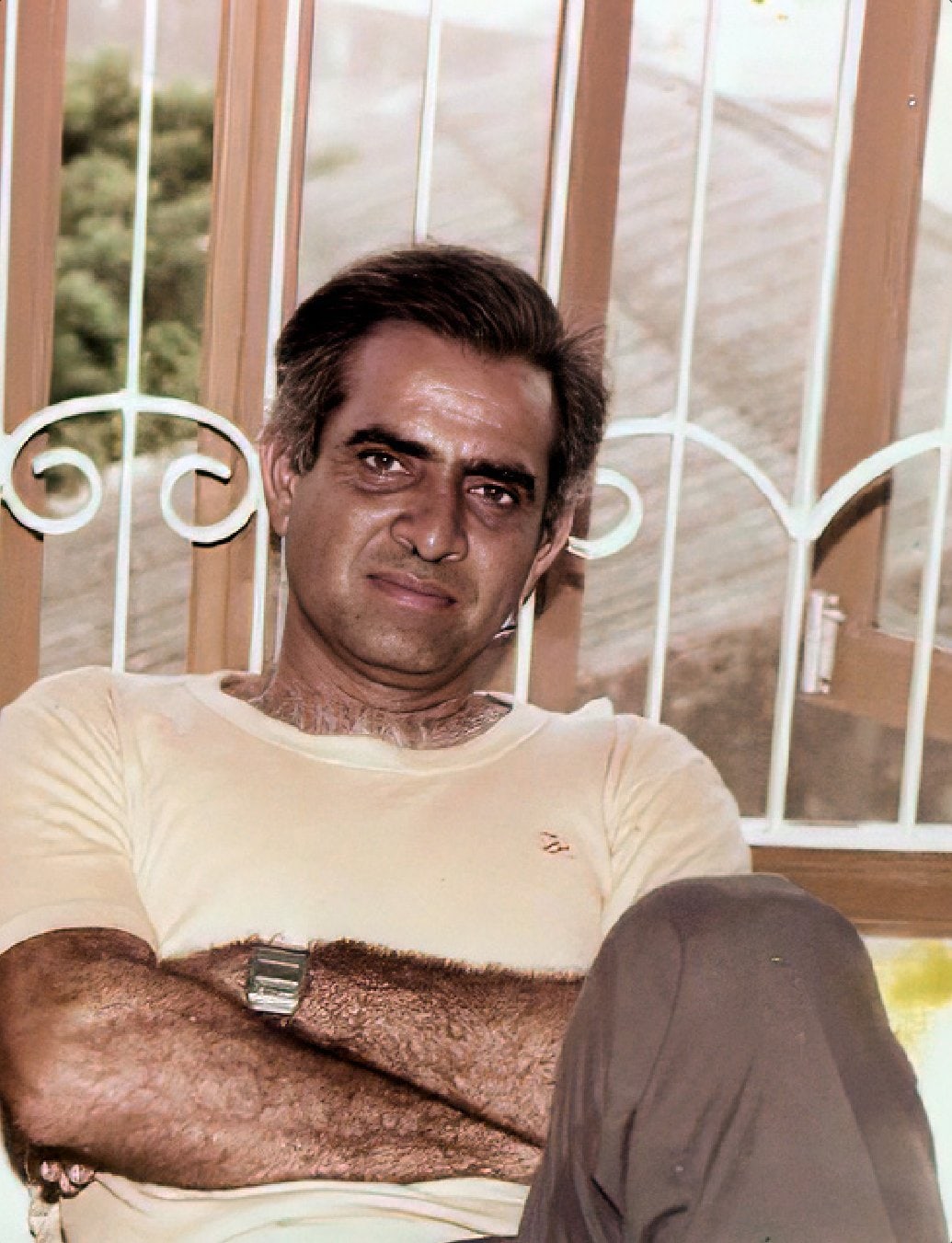
I can visualise Kake sauntering up and down the road between the School and the Ashram in the early hours of the morning greeting people with “Bonjour” or “How are you?” Always smiling, always happy, full of joie de vivre.
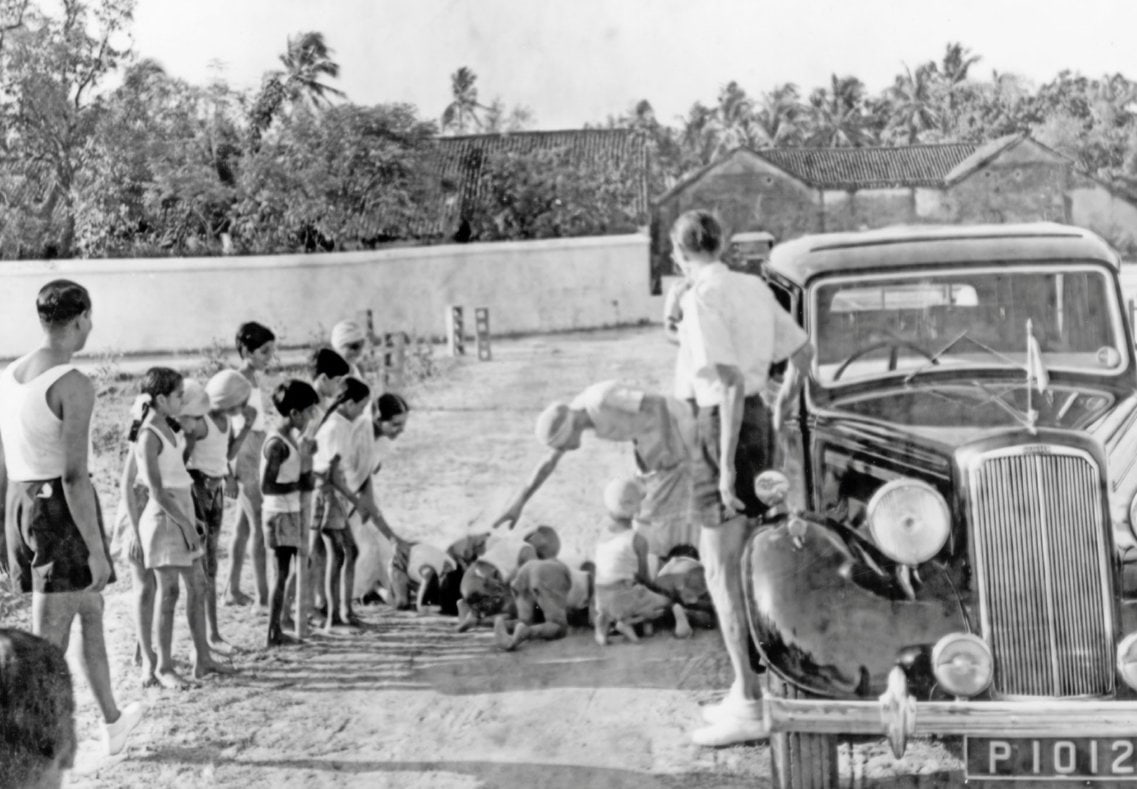
Wandering through memories of sixty-three years ago I see the child Kake with his other tiny friends at the Sportsground eagerly waiting for the Mother’s car to arrive. A bundle of energy, bubbling with life, Kake is the star attraction who zooms clearly into focus among the other starry children. The sound of a horn alerts the scattered children. They at once assemble and wait for the car to stop. The Mother gently alights from the car and all the children fall at her feet. Oh! What a marvelous sight! The Mother is radiant with Her smile emanating joy and love all around. She blesses the cherubims one by one tenderly, lovingly, happily. The children too are overjoyed by the Mother’s presence and they dance around in glee. The whole Sportsground is vibrant with love, beauty and joy.
The passing of years did not change the sweet countenance of Kake. Even at the age of sixty-seven he wore the same face I saw sixty three years back in the Sportsground. Then he was just a four-year-old kid. Though the face and body got a lot bigger, Kake maintained the same bright face with chubby cheeks, sparkling eyes and an ever-smiling visage.
One last thing, I address you as ‘our dear Kake’ for the very simple and obvious reason that you could never belong to anyone but to all of us lucky ‘labbits’. (For those who don’t know: Kake once asked the Mother, “Mothel, Mothel, labbit lace (rabbit race)” and She replied, “pas ca mon petit (Not this, my little one)”.)
A vivid dream
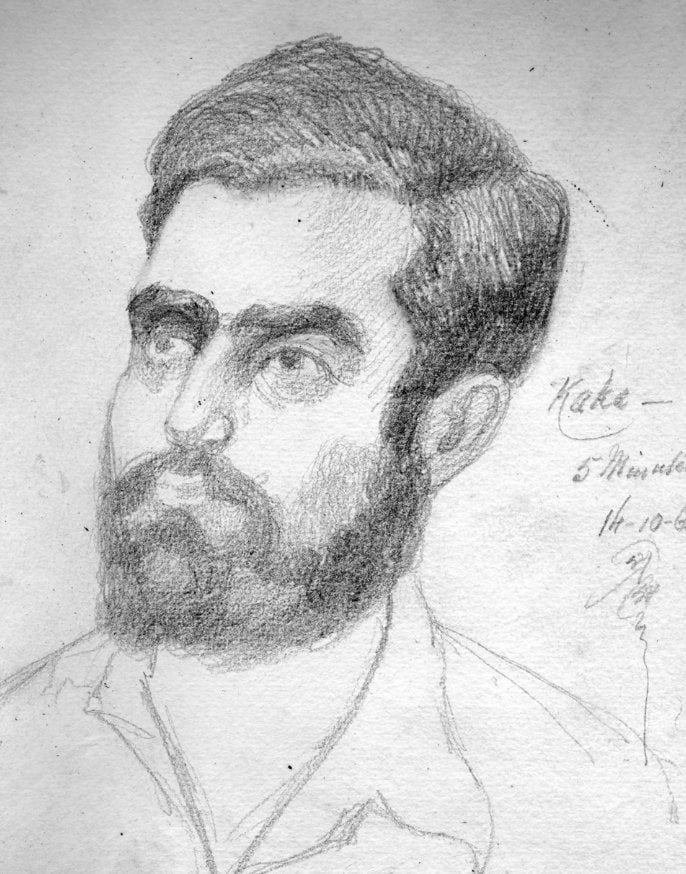
There were many of us gathered there for some sort of roll-call. We were all standing in a queue outside a room. Right near the door of that room, a Buttyda – like figure sat by a table with a register and a pen, making some entry in it as each of us approached him one by one. The individuals whose work was over just lingered around in that room.
Suddenly, I saw Kake coming from the opposite direction. He simply walked through the people, without anyone taking any notice of him. He approached the Buttyda – like figure, who noted down something in the register after Kake spoke to him. After this, Kake turned towards us who were waiting for our turn.
The moment he turned towards us, I – perfectly conscious of the fact that since he was no longer with us, this was definitely his spirit – called out aloud, all excited: “Kake tum? (Kake! You here?)” At this, he looked at me, rather glared at me, as though asking, “Why did you make my presence known?”
But then he gave a very gentle smile – typically Kake type – and asked, “Are you people still thinking about me?”
“All the time, Kake. All the time,” was my reply.
After this, Kake started talking to Mahendrabhai of Honesty Departmental Store. My attention was then drawn towards a card bearing the name of some place – five or six letters – beginning with an S and ending with pur. I saw the name very clearly, but forgot it later.
I woke up wondering why I had such a dream, and who that Battida-like figure was. What was he noting down in that register? Why did everyone except Kake appear like shadows? And above all, what was the name of that place written so distinctly on that card?
The only answer I could surmise to all these questions was yet another question:
Are you preparing to come back amongst us, Kake?
Kake Tauji – The make-believer
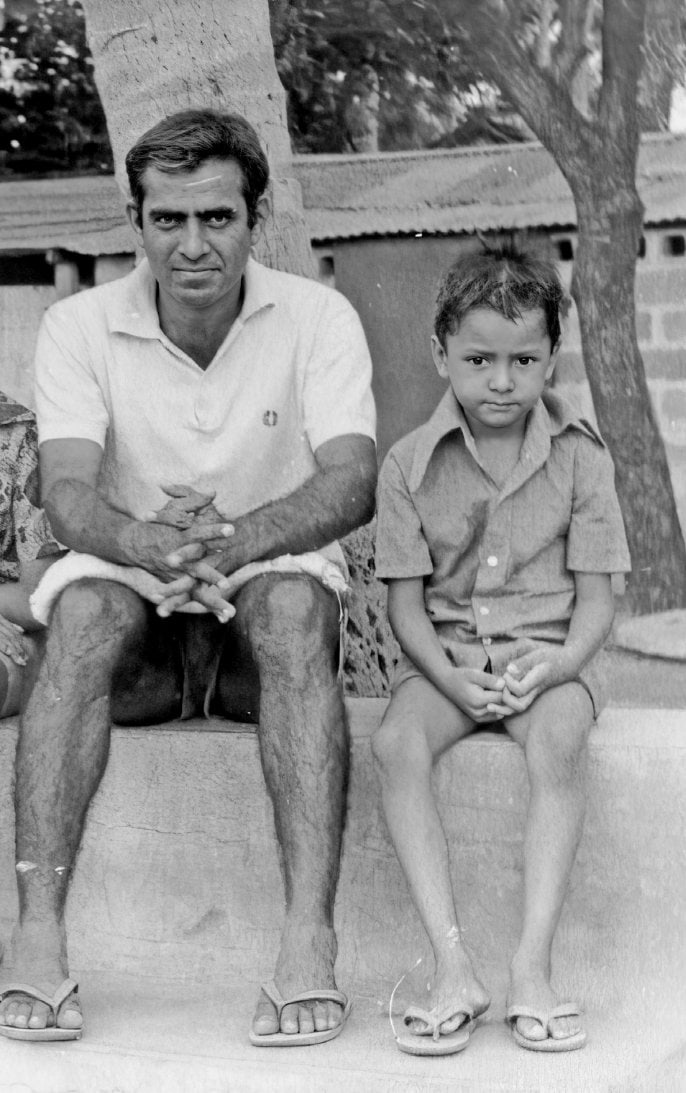
Kake Chacha and I were once going to the market on his motorcycle. In the congested streets of Pondicherry market, two white women were looking a bit confused. People continued with their business, paying little attention to the women… but not Kake Chacha. He stopped to ask them if they needed any help. That was so typical of him. He would always help wherever he could. Even if a chair needed to be carried from one room to another, Kake Chacha would do it… and do it quickly, possibly before most would even realize what was happening.
Ever composed, I do not recall him ever losing his temper at Pranjal or me when as kids we would go to spend our vacation in Pondi (though I’m sure we gave him plenty reason to). Always we would be welcomed warmly in his room where there would be a relaxed atmosphere with carrom, TV, etc., all going on simultaneously. There would be sharbats and snacks and I recall with nostalgia having spent many a relaxed afternoon with Kake Chacha, Vandana Didi, and the many friends.
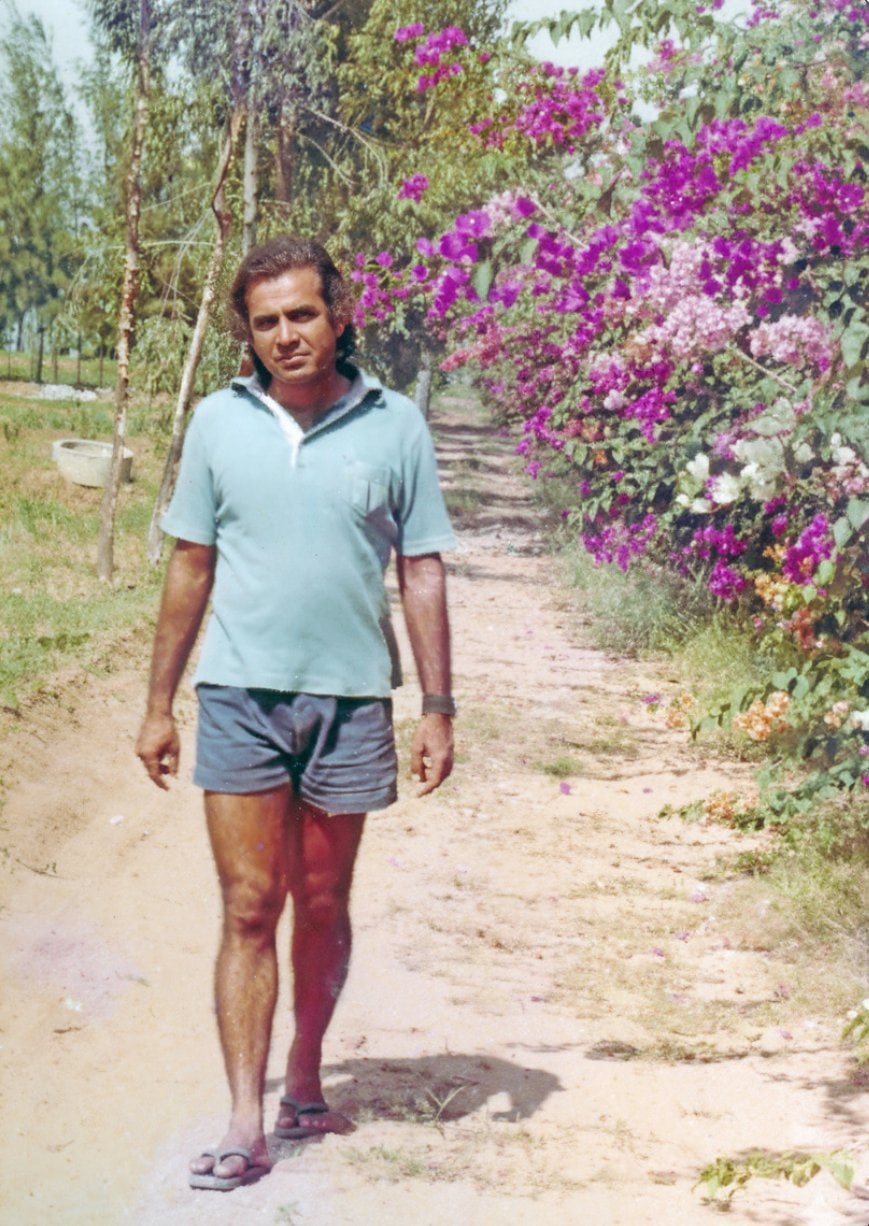
Once in his room in the old house (Rue Debassyn de Richemont) he amazed me with his story about flying in the skies. He said he would sit by the window and be quiet… really quiet. Then a thick cloud carpet would fly and stop just below the window. He would hop on to it and go flying everywhere. Later the cloud would again come and stop by the window and he would hop back into his room. He told me I too could beckon the cloud if I was really quiet. It was a good trick to get me to be quiet but for years I believed the story… because such was his personality and self-confidence that I could believe he was capable of not just flying but also other amazing feats.
He was in Delhi once for my birthday and gifted me a game called Strategy. Even though the party had just ended and there were still people around, he sat me down and patiently explained how the game was played. Not once did I feel I was being ‘taught’, and he made the game seem so interesting and exciting. Strategy became my favourite game for many years to come, and maybe it would have been just another ordinary game had he not made it ‘come alive’.
Once the house was full and I was to sleep in his room but the problem was there was only one bed. My protests were not heeded and I was given the bed while he slept on the bare floor. So uncomfortable and awkward I felt at this arrangement, but he would hear nothing of it. Next day he told me he had caught a cold, so thankfully other arrangements were made.
He had a soft corner for the poor and needy. One time when I reached Pondi he asked me if I had tipped the driver and I said yes. So he suggested I tip him some more as the driver was building a house and was badly in need of money. He would make sure the maid got to watch some TV in her spare time, and would even often put on movies for them. He treated the drivers, maids and servants really well, and they adored him too.
Reminiscences
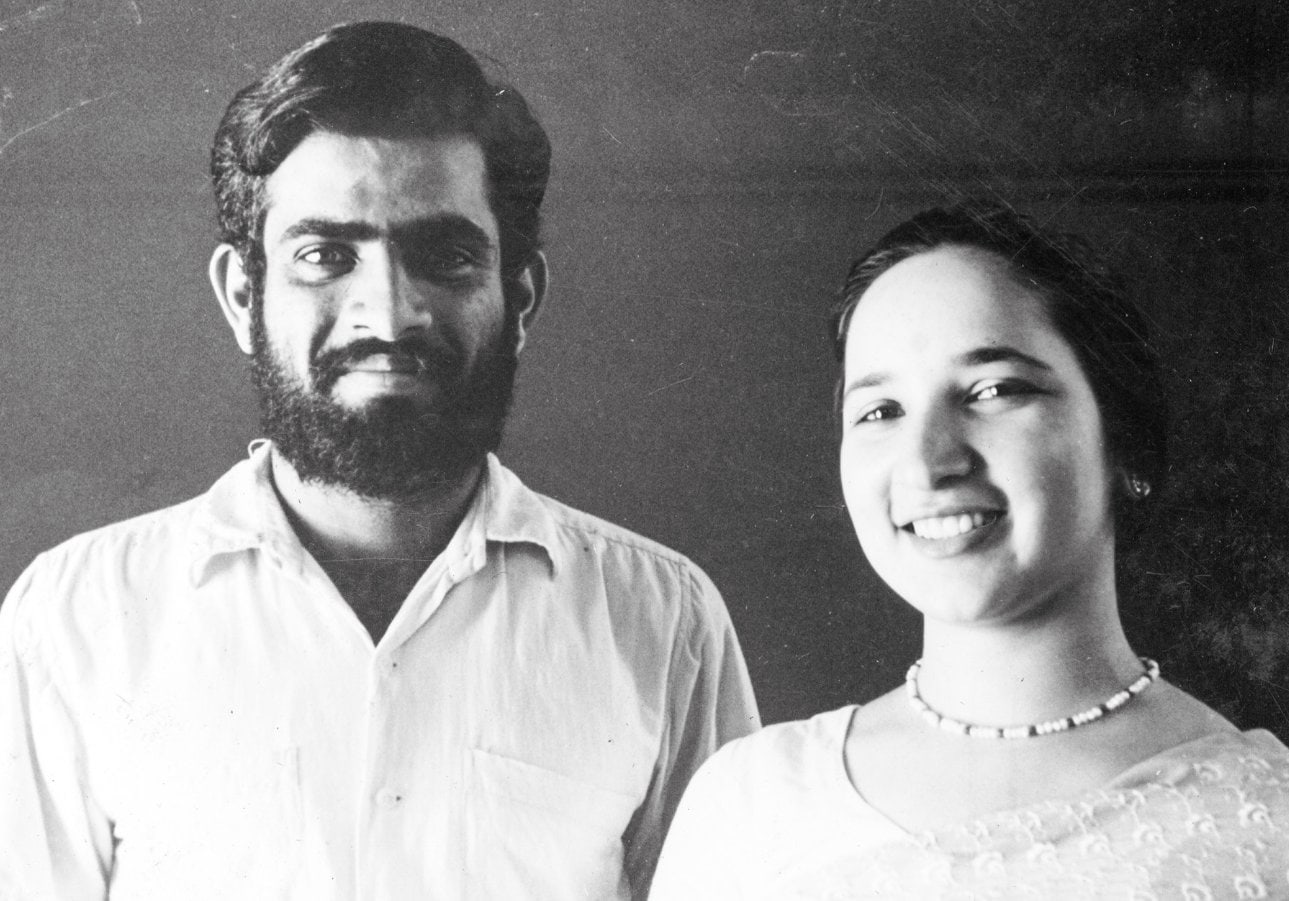
I married Jitender Jauhar (the third of the brothers) in 1963.
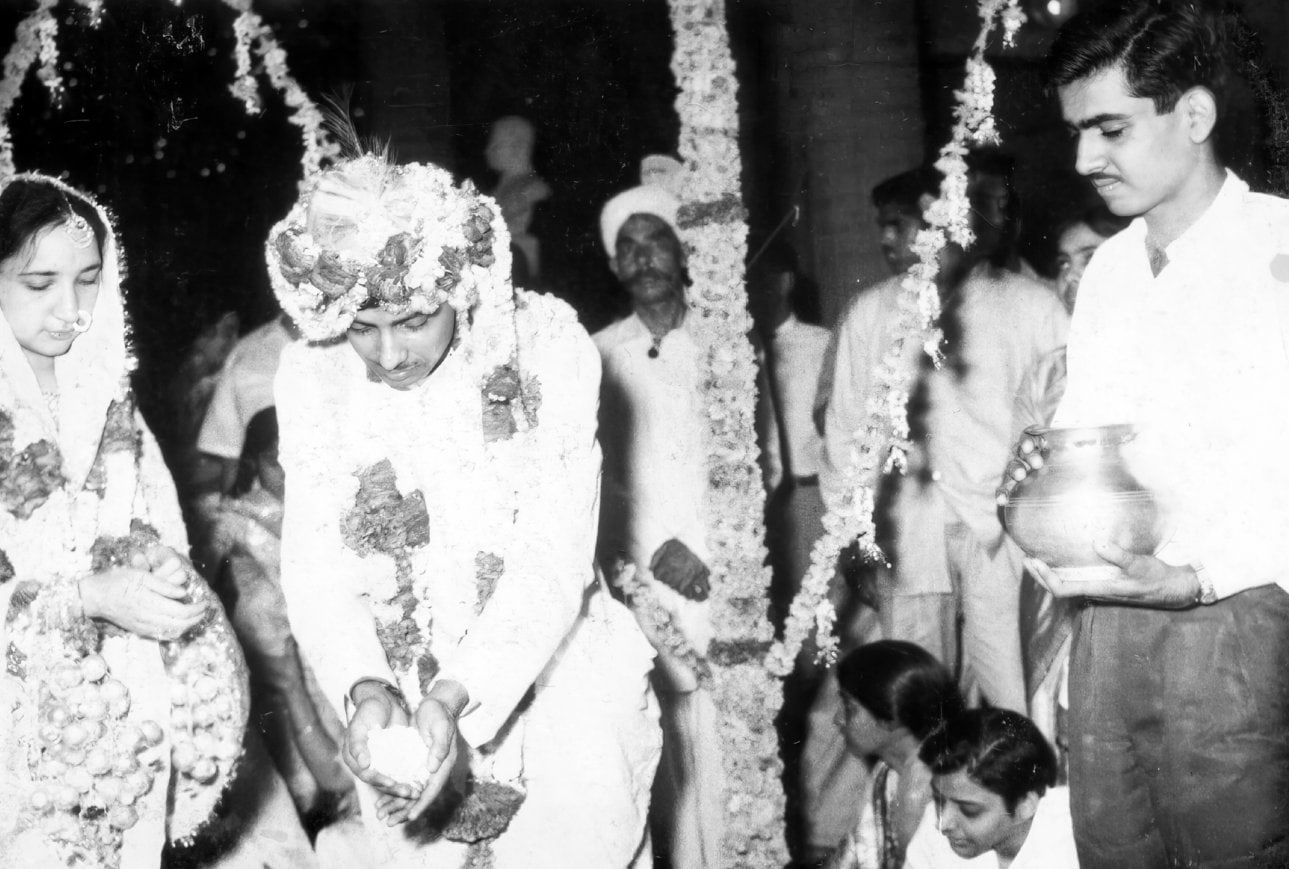
I went to Pondicherry as a bride and bonded instantly with my two younger brothers-in-law – Promesse and Victor.
Promesse in particular endeared himself to me because of his innately caring nature. He would climb coconut trees to fetch me coconuts. He would buy me papaya almost every day.
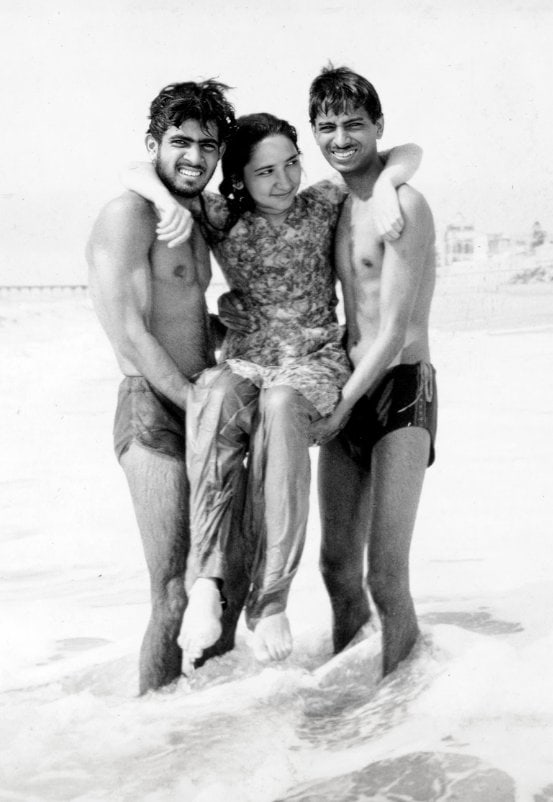
On my first visit to Pondicherry, I was wary of the sea having never seen it before. But the brothers literally carried me into the sea and that dunking was the beginning of a beautiful fraternal relationship with Kake. This bond lasted till he passed away.
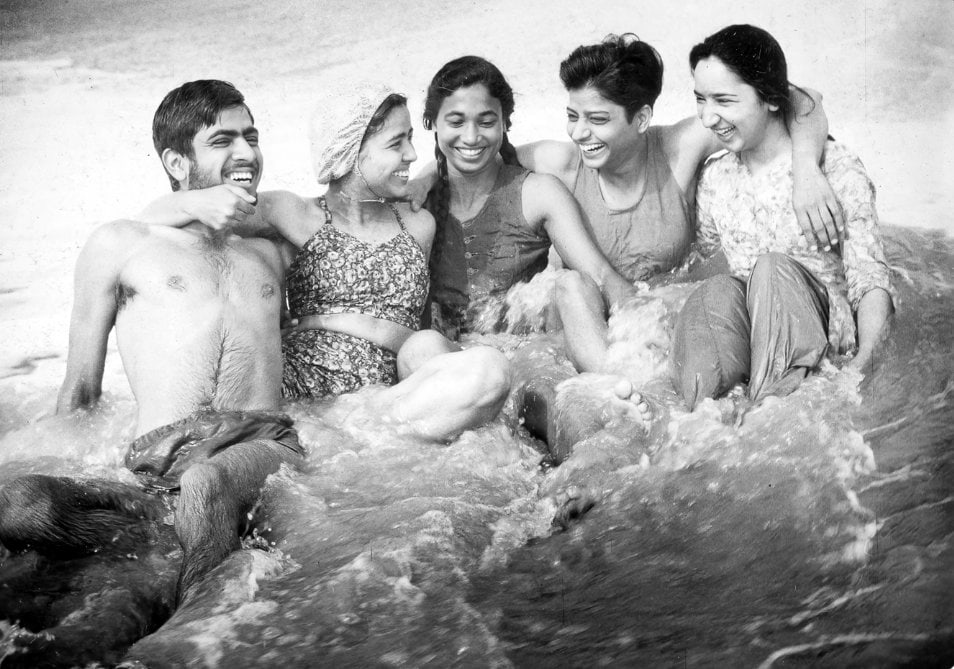
As my fear of the sea disappeared, I made friends with my sisters-in-law and we often went to the beach together.
I remember on my last trip to Pondicherry during Kake’s lifetime I had to travel to Bangalore. Kake called me frequently, to check on me, until I reached my destination.
He was so lively, so loving, so full of fun, God took him too early.
I will always miss him.
In Loving Memory of Kake
Kake was a friend, mentor, and guide – yet he never imposed himself on anyone. His way of guiding was gentle, effortless, and full of warmth. He inspired through example rather than instruction, through action rather than words.
I remember those early mornings of 1965–66, when he would take me swimming in the sea. Every Sunday I accompanied him to a picnic with Norman – long walks of 5 to 10 kilometers, carrying just some bread, water, and a few bananas, perhaps a bit of homemade mixture or Upma packed lovingly from home. We would be back by 3 p.m., just in time to join the group activities at 4 p.m.
As teenagers, from about the age of 12 or 13, we cycled further and further – towards Marakkanam and Perumukkal, returning via the old Madras Road. Later came the Auroville road work years of 1967–68, and then the seasons of 1969–72 at the Auro Orchard, harvesting groundnuts under the sun. Those were years of learning, laughter, and silent strength. After that, camping every year from the 2nd to the 9th or 14th of December became a tradition – a rhythm that connected us deeply to the land and to each other.
Later, life placed us in different departments. We saw less of each other, meeting mostly on his birthday at his place. Yet each meeting was filled with the same affection, the same quiet bond that time could not erode.
When Kake moved to Nandanam Orchard and then the lake I would often cross paths with him during my school years. Every morning, at 4:30 a.m., he would be seen walking past the Samadhi up to the Sri Aurobindo’s room, returning by 5 a.m. He would then open the school and walk barefoot in front of the Ashram block until 7 a.m., before the students arrived.
Afternoons were for tennis, evenings for group activities, dinner by 7 p.m., bed by 8 p.m., and again up by 4 a.m. His life was a rhythm of discipline, devotion, and grace – simple yet profound.
Through every situation, Kake radiated happiness and positivity, even in the face of distress and this left an indelible mark on everyone he came in contact with. His presence lifted others effortlessly. Whether in work or play, challenge or rest, he carried a quiet joy – a contagious, luminous energy that made everything around him lighter. Kake da helped whoever was in need without them even knowing it.
For all of us who were touched by his life, Kake remains a symbol of steady faith, silent strength, and simple joy. His life was not about grand gestures but about small, consistent acts of goodness that shaped everyone who knew him.
Promesse Jauhar
So, this story is from somewhere between 1985 and 1986. I have many stories of Kake da, but I think this one captures him perfectly. It shows not only the kind of person he was but the kind of teacher he was, even though technically he wasn’t our teacher at all.
Some afternoons, when we had a free period, we would gather outside the teachers’ room near the drinking water area. We’d sit there chatting, laughing, pretending to be busy, but basically being a nuisance to anyone who had real academic ambitions.
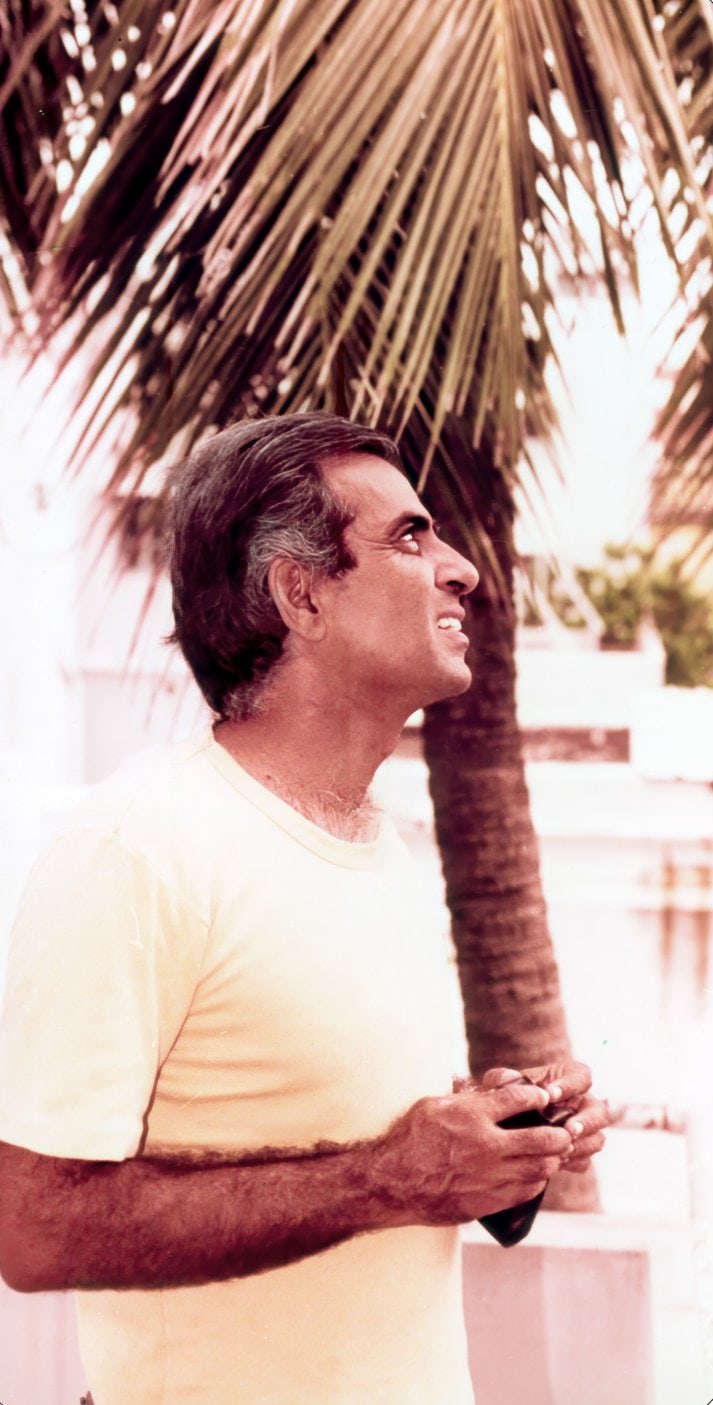
On one such afternoon, for reasons known only to the universe, Kake da showed up. He didn’t seem busy, he didn’t seem to be going anywhere in particular, he just saw us and came over to our table. He was someone we loved playing silly mental games with and he was always indulgent with us. He gave us riddles and puzzles and watched us run off like overexcited squirrels to solve them.
I don’t remember how the topic came up that day, but he suddenly said, “Today I have a very interesting game for you kids. Whoever can answer it will get a very big gift.” Or something like that. Obviously we were hooked. We loved puzzles and we loved gifts, and this sounded like an easy afternoon victory.
He said, “Answer me this. Who are you?”
Without thinking, all of us shouted out our names. We were very proud of ourselves, as if we had cracked some important code.
“So, Arpit,” he said, pointing at me, “imagine that I’ve cut off your right leg. Who are you now?”
“I’m still Arpit,” I said, slightly confused but still confident.
“Good. Now imagine,” he said to one of my friends, “that I’ve cut off your left leg also. Who are you now?” We looked at each other and said the same thing. We were still who we were.
“Fine,” he said, sounding a little too cheerful for someone amputating children. “Now I cut off both your arms. Who are you now?” This was getting dark very quickly. But we played along. We insisted we were still ourselves.
Then Kake da really got into it. He started removing us piece by piece. First the eyes. Then the liver. Then the stomach. Then the lungs. Each time he asked the same question. “Now who are you?” And each time we responded with our names.
Then he said, “Imagine I’ve removed your heart and replaced it with a mechanical pump that works exactly the same. Now who are you?” This went on until none of us had legs, arms, eyes, lungs, stomachs, or hearts. We were basically a bad science project by now.
One by one, he removed everything except the brain and the mechanical heart. No bones, no mouth, not even an esophagus. And then, with great enjoyment, he tapped the final frontier. The brain. He began removing tiny bits of it and replacing them with little electronic chips. Still asking, “Now who are you?”
I think you can already see where this was heading. He had taken one of the oldest philosophical questions ever asked, “Who am I?” and turned it into an unforgettable afternoon game. He could have given us a lecture about the Upanishads or Descartes or Ramana Maharshi or any of the greats who had wrestled with this question. He could have quoted something profound. But no.
That wasn’t his way. Kake da being Kake da, he made it fun. Strange, slightly traumatic, but great fun! And it worked. It made us think. Really think. For me at least, something landed that afternoon. It left an impact that stayed with me long after all my imaginary limbs had grown back.
And that was his gift. Not the big reward he promised us, but the seed of a question that still sits quietly in the back of my mind.
Who am I?
Promesse
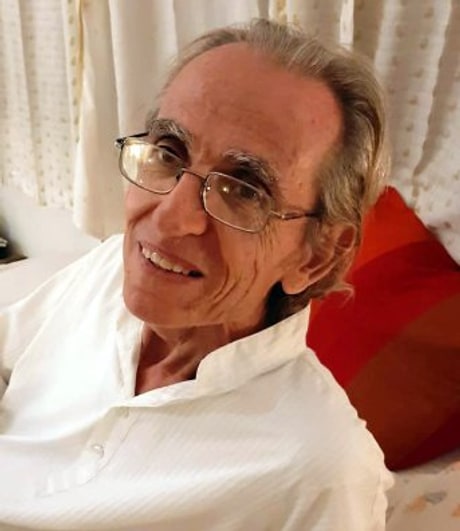
He had made so many promises. The promise to be there, every morning, in front of the School, to wish us “Bonjour!” and give us a smile to start the day – a luxuriant smile that was not a luxury.
The promise to walk every year to Gingee, weather permitting or not, carrying as far as possible as many children as you wish on his shoulders and as many songs in his heart.
The promise to leave school just before the bell rings and, like Father Christmas, to distribute watches to Mother’s children so that they may remember it’s never too late to be grateful.
The promise to always have a surprise springing from the bag of a child mischievous and wise. The promise to wait patiently on the steps for a student to suddenly awake to the need to embark on Free Progress – he who believed only in the progress of freedom.
The promise to play all his matches and, if possible, those of the others – whatever the division – he who hated divisions and loved to multiply smiles for smile’s sake and service for service’s sake.
The promise to play the ‘game of life’ till the last set, before leaving the court empty and our hearts beaten – for a second. The promise that one can do yoga without making a big fuss about it, make friends without making enemies – a prodigious task.
The promise that life is not what we think, so why break our heads and split our hair – better sing lullabies and read Tintin. The promise that he will always be with her whom he loved more than his own life – wherever he goes, wherever she goes, on earth or in Heaven – for the simple reason that love is a path one has to follow till the end, and as there is no end…
The promise that he will do everything for Her, that he will always stand at Her side, ready to put back under Her feet the little stool that we tend to take away. The promise that we can live with Her smile till the last moment – because this Smile is Herself, and that She is there, always.
And all those promises he kept – kept them lightly, as one holds a feather, or as one should hold the truth in one’s hand, like a bird, and let it fly away, for ever free. And that is why we too promise to wait patiently for our soul to come and sit near us on the steps and tell us:
“Here I am! Promise fulfilled!”
The Vitruvian Man
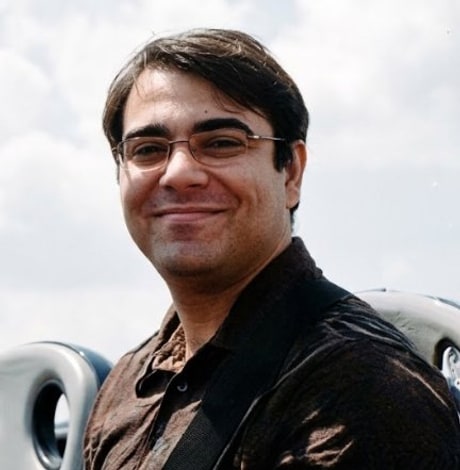
From a very early age, I always admired Kake Mamu and secretly wished I could be more like him. Kake Mamu was one of those rare people who refused to live life in the narrow terms dictated by the conventions and mores of his social environment. He was at once a scholar and a craftsman, a teacher and a seeker, a realist and an idealist, a materialist and a spiritualist, a friend and a rebel, a restless wanderer and a rooted soul. He remains one of the most inspirational and influential people in my life.
It was through him that I first encountered and learned to appreciate – subjects as varied as mathematics, astronomy, chess, horology, theatre, classical music (both Indian and Western), popular music (both Indian and Western), and the world of Tintin (but not Asterix). Unfortunately, I have not been able to attain even a fraction of his proficiency in any of these subjects (except for Tintin and, may he forgive me, Asterix). But most of all I am grateful to Kake Mamu for living his life with an almost otherworldly strength, kindness, generosity and loyalty.
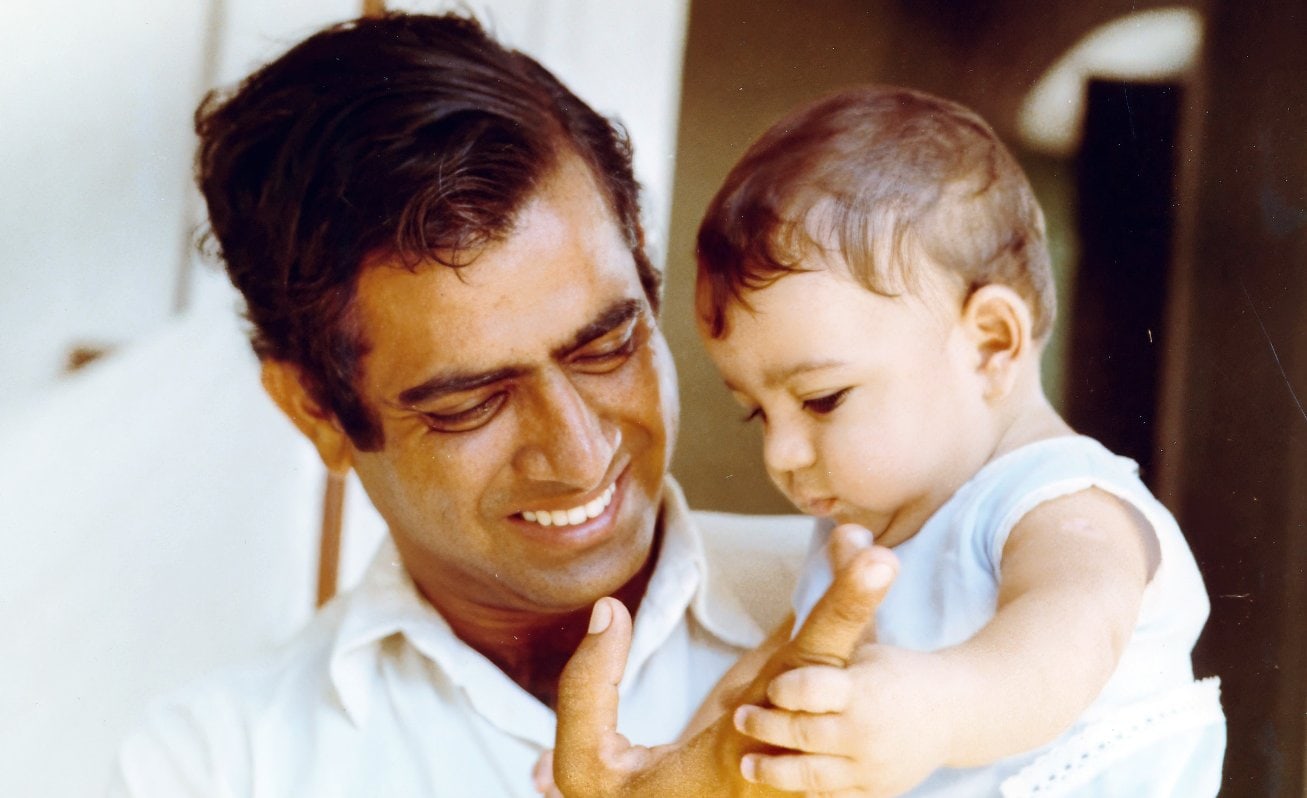
His spirit was always giving, his heart always loving, and his mind always open. In his relationships as a father figure, friend, sibling, and son he became a model of human goodness I can only hope to follow; and as a partner, he achieved a quiet apotheosis that remains profoundly inspiring and will forever serve as my lodestar.
His unassuming yet affable manner combined with an almost childlike enthusiasm and simplicity, disguised strongly held convictions and sophisticated insights arrived at after deep thought and meditation, spanning an incredibly broad range of the human condition and experience. He was an educationist, a humanist and a liberal to his core who passionately believed in and relentlessly worked towards creating an environment in which each individual could realise their own potential, find their own voice, follow their own path and flourish on all planes of human striving. He mentored without any vanity or ego and possessed the ability to distil the most complex ideas to their purest essence: guiding and explaining without any condescension, simplifying without flattening, and tracing intricate connections that enabled others to see the underlying structure and the overarching edifice simultaneously.
I once accompanied him, at the behest of Ladi Masi and Bade Mamu, to a meeting with a production company who had been tasked with making a documentary about my grandfather’s life. In the course of the meeting, the filmmakers asked whether someone could explain Sri Aurobindo’s philosophy and its appeal. Without ostentation or conceit, Kake Mamu condensed Sri Aurobindo’s voluminous and abstruse body of work into an eerily precise, sharply coherent and bafflingly comprehensible précis of five sentences – something that continues to elude the most erudite and prominent scholars to this day. I wish I had recorded it, but despite innumerable efforts, I am unable to recreate what he said and how he said it.
To me, Kake Mamu was the epitome of the Renaissance Man. His life embodied a harmony between reason and intuition, a balance between the physical and the intellectual, a synthesis of beauty and utility, and a rejection of hierarchies – whether social, intellectual, or spiritual – in favour of integration and unity.
Driven, like Prometheus, to share fire with others, his life became an Odyssean adventure of consciousness, undertaken with Daedalus’ creative skill, guided by Chiron’s quiet wisdom, tempered with Apollonian intellect, and kept constant with Atlas’s steadfast strength. Like the heroes of ancient Greece, he was not larger than life, but more vivid than life, leaving behind a mythology rather than a history. To me, he will always be a legend.
The Lasting Influence of a Spontaneous Offer
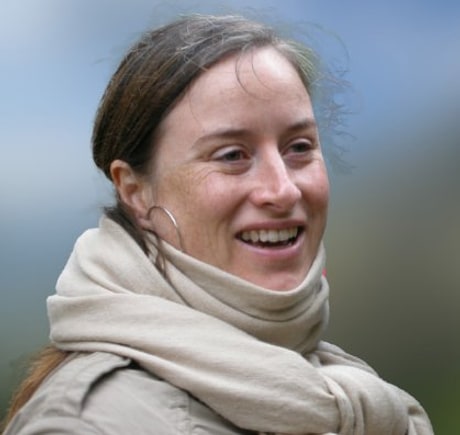
Kake Mamu changed my life in a way that, on the surface, might seem almost incidental. There was no defining speech, no moment marked as important at the time – just a moment of togetherness and a spontaneous offer.
We were all relaxing together in one of the many rooms of the Jauhar home in Rue Lally-Tollendal in Pondicherry. We had come to visit for a few days which made me very happy and, as always, we just loved spending quality time with the family. Nothing in particular was happening other than the usual cheerful and effortless conversation that made spending time with Kake Mamu so very enjoyable. I remember noticing a beautiful wooden cupboard in the room, an elegant piece of furniture with finely crafted inlay work. I mentioned how much I admired the cupboard.
Kake Mamu promptly responded: “Take it.” I started laughing thinking that he was just being kind. “Really, if you like it, take it,” he said. I was still laughing saying, “no, no, no, of course not,” only to have him repeat, “Really, if you like it, take it.” I started to understand that he actually was being serious, that he meant every word he said. A strange mix of awkwardness, shame and humility crept upon me thinking I shouldn’t have said anything. And yet, at the same time I couldn’t help but be deeply touched by his kindness, his spontaneity and his sincerity. I had never experienced anything like this before. It took me a good amount of time to convince him that, of course, I wasn’t going to take the cupboard but instead remember his loving and generous offer forever.
That gesture revealed something I had not yet understood: that generosity can be instinctive, that giving can arise without effort, and that our attachment to things is often far heavier than it needs to be. That moment rearranged something within me – not dramatically, but profoundly. Kake Mamu’s spontaneous act of generosity, his lightness, his being unburdened by the attachment to things, his capacity to value giving over ownership has had a meaningful impact on what essentially matters to me, realising how much of life we experience through the accumulation of objects, of opinions, of hesitations, of boundaries around what is ‘possible’ and what is ‘ours’. Kake Mamu exemplified sustainability at a time when the world had not yet understood its value. He cared, he repaired, he shared his possessions as well as his knowledge, he inspired and invested in the next generation, and built connections beyond life. In my case what stayed was not the object, nor even the possibility of having it. It was the immediacy of his response, the absence of calculation, the complete ease with which he let go. His gesture showed me that generosity doesn’t require deliberation; it can be immediate, joyful and deeply powerful when unexpected.
Thank you dearest Kake Mamu for this most precious gift.
Kaké Mamu
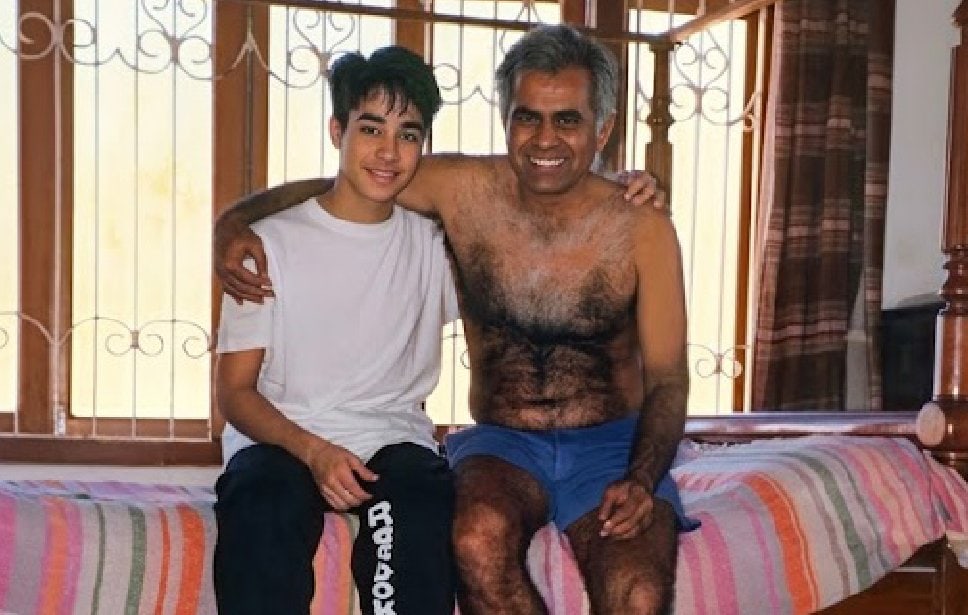
From my first moment of consciousness I knew I had a large and special family, with loving aunts and uncles who were simultaneously friends and parents, all uniquely individual, and collectively impossible.
Arriving in Pondicherry as a child was a rollercoaster ride. The growing excitement in anticipation of seeing everyone, until we finally got out of the car, and our whole family was on the street to welcome us. The rules were clear. First, you greet your grandmother. After that, there were no more rules. Just a sea of lovingly open arms waiting to give you a tight hug, and a chorus of ‘me first, me first’!
Kake Mamu always welcomed me in the same way. A booming triplet of “Hello Chhotu, hello Chhotu, hello Chhotu!” in his loving voice and his grip tightening to the beat and rhythm of the echoed greeting. He was present, calm and entirely focused on me seconds after he had already single handedly carried all the suitcases up to the rooms, answered various organisational questions, had a meaningful conversation with the driver, whose refreshments he had organised, and mentally solved complicated problems for his adulating students arriving imminently.
And that is how the rest of the holiday went. Kake Mamu was the busiest person with the most time. He was a whirlwind of energy. He’d enter the house, get thousands of things done and then he was gone again. He was always giving solutions and making himself available to everyone who needed him. Yet, when he was with you, he was truly (his favourite word) with you, and when he wasn’t, you still felt his presence.
I have endless beautiful memories with my uncle. He’d take me for a 6:00 am sea swim because no one else would and he couldn’t see me disappointed. But his ever-famous toughness demanded we walk barefoot on the poorly tarred street because slippers were for the weak. I’d want to keep up so I tried, only to have him pick me up and carry me instead.
Afternoons were designated Kake Mamu time. He taught me chess and bridge, and we’d listen to old classics on his turntable. Sometimes I’d just enjoy the breeze in his room whilst he would tinker with watches and other antiques and more unfathomable objects. Every now and then a student would arrive, or someone would shout up from the street, and with those brief encounters more problems were instantly solved. He was always giving. Giving his time, sharing his knowledge and teaching something, giving you a beautiful relic from his archives, giving you his shirt if you needed it or even his bed to sleep on. The list is endless. In my teenage and later years, the afternoons progressed from wrestling to chatting and philosophising. Every interaction, every conversation with Kake Mamu left one happier than before.
After dinner when everyone was asleep Kake Mamu would take me to the terrace and we’d gaze at the stars. He had a telescope and an amazing inquisitiveness for the incomprehensible vastness of space. Kake Mamu was a deep person and a thinker. Those attributes were often missed in the hecticness of the days but were very accessible in the stillness of the evenings.
I was and still am in awe of my uncle. His ability to connect with anyone. His authentically unprejudiced, non-discriminatory and non-judgemental approach to all human beings, and any subject matter. That’s what made it easy to speak to him. He was always listening and his advice was inspiring. He never created guilt or regret in anyone. He was beyond positive as a person and I remember how even his choice of words and manner of speaking always reflected his innate positivity.
It’s hard to speak about Kake Mamu in the past tense. His presence is still so strongly felt. If I’m despondent or unnerved or stressed I can still hear, feel and see Kake Mamu telling me “don’t worry Chhotu, it’s alright, why do you get upset?” with his signature smile and gesture.
He usually follows up with a tap on the shoulder and a triplet of a hug.
The world knew Kake Mamu as strong & courageous, selfless & generous, content & happy, kind & caring, calm & composed. To me he was kind & loving.
Kake Mamu was all of it so much more.
The Mother named him Promesse. It was meant as a promise to my grandfather. To me, he was, and is, the eternal promise of goodness.
Kaké Mamu

Coming to Pondicherry as a young bride, I met Kake Mama for the first time – twinkling eyes, a broad smile, and a hug that stayed with you long after you’d left. He had a genuineness that was rare: he saw the best in everyone, held no judgements, and radiated a calm that made you feel, simply, at ease.
He noticed things. A passing mention of my love for antiques was enough – he was soon leading me through old treasure troves, talking about patina and periods and styles with the quiet enthusiasm of someone who truly loved beautiful things.
When Amayra arrived – the first granddaughter – he took to her completely. He showered her with little treats and trinkets, and when he lifted her onto his shoulders, she wasn’t just high up; she was on top of the world. He listened to her chatter like it mattered, because to him, it did. Anahira saw him only briefly, but we make sure she knows him still – through memories, pictures, and stories passed down with love.
And if he knew you loved something – jhalmuri, in my case – he made sure Vandana di had it stocked before I’d even arrived. Every evening, without fail, his voice would ring through the house: “Dolly, Dolly, Dolly, have you made jhalmuri for Niharika?”
I did not have him in my life for long, but some people leave a mark that has nothing to do with time. He was strength, love, and quiet inspiration – and we think of him every day.
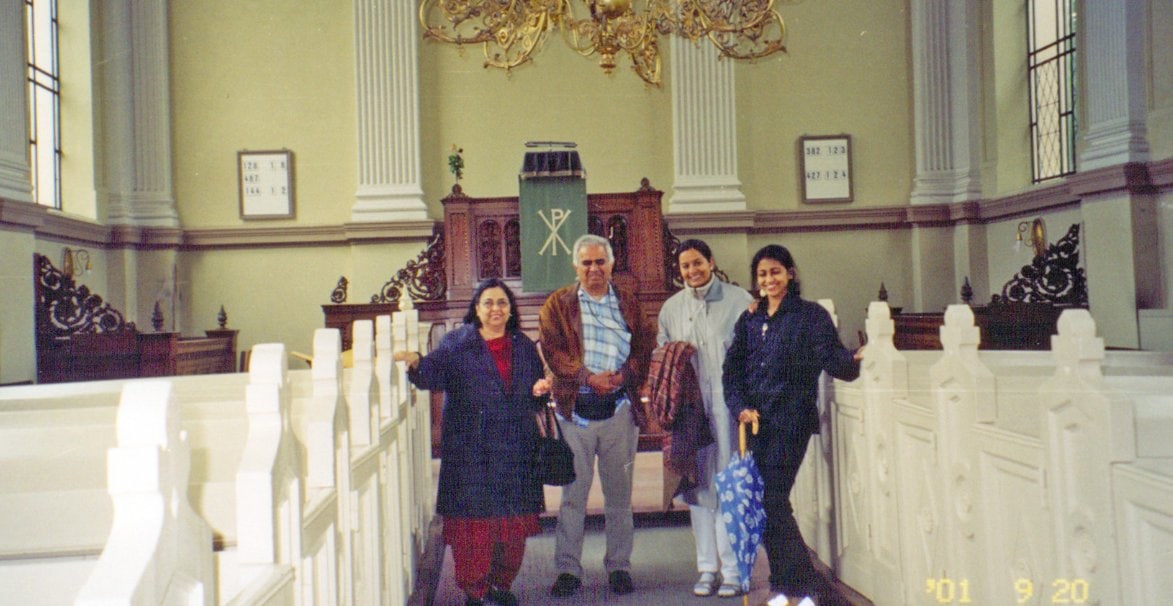
Kaké – A Born Sadhu
‘Auld Lang Syne’ – The Good old Days
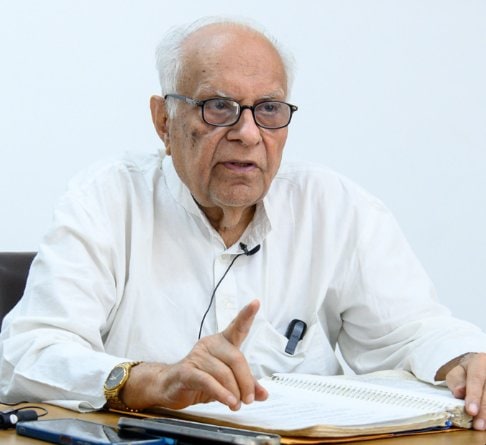
My earliest memory of Kaké goes back to our childhood in the Ashram. I must have been three, and he was just a few months younger. I still remember his ‘mundan’ ceremony – his first haircut – performed by the Mother herself. She snipped the first lock of his hair, and all of us children of that age were invited. It was a simple, joyful day filled with food, laughter, and that special warmth which seemed to follow Kake all through his life.
Even as a boy, Kaké stood apart. There was a natural detachment about him, an ease with simplicity that most people struggle to cultivate. He cared little for material things.
When the Mother distributed sweets after the evening physical activities, he would take his share with a smile and quietly hand it to those standing next to him, knowing they enjoyed it more. We used to ensure we stand next to him to get the sweets he so generously passed on to the other children. His indifference to small pleasures never came from austerity or pride – it was simply who he was.
He lived frugally all his life. He walked barefoot, owned little, and saw no need to acquire more. But then he donated more than what he may have saved all for a greater cause towards realising a greater ideal.
Generosity came to him as naturally as restraint. He was always ready to help, never made a display of it, and never expected acknowledgment. When I was seventeen and fell seriously ill, he was one of those who volunteered for night duty at my bedside. He would sit quietly, alert through the hours, in case I needed help. He used to lift my frail and weakened body in his arms to the toilet with a care that left a mark on my heart.
In spirit, Kaké belonged to a long tradition of seekers – strong-willed, ideal-driven, and drawn to something higher than worldly success. He was deeply devoted to the Mother, and his faith guided everything he did. He worked hard, often in silence, and found joy in service.
Frugality, to him, was never about withholding; it was a way of freeing himself so that his energy could go toward what truly mattered.
Even in our youth, his determination was remarkable. I remember how, during our sports sessions, he refused to warm up before races. His reasoning was that true performance should be measured as one is, not after preparation. Whether that logic was sound or not, his sheer willpower often carried him through. He was an excellent middle-distance runner – strong and steady. There was an obstinate courage in him that commanded respect.
Our lives moved in different directions later, but the connection remained. He became known for his unorthodox ways of teaching – sitting quietly in one corner of the school, allowing students to come to him with any question, from mathematics to Shelley. His answers were simple and sincere. To him, learning was a conversation, not a system.
He questioned old practices when they seemed unfair, and he always tried to act according to principle, even if it caused discomfort. He had to endure an attack by someone irate with him over his method of handling the labour at the Ashram lands. His days began before dawn, with prayer and quiet work. In the evenings, he repaired watches – a hobby that required patience and precision, qualities that reflected his temperament.
He played tennis barefoot on the hard court, even in the blazing Pondicherry sun, denying himself any comfort. That same uncompromising spirit, which had defined him since childhood, stayed with him till the end.
When I look back now, I see his life as a quiet, unwavering line – untainted by ambition, guided by faith, and sustained by kindness. He never sought recognition, and yet he left a lasting impression on everyone who knew him. His smile was always ready, his presence always steady.
Kaké’s life was, in many ways, a meditation – on simplicity, on goodness, and on the pursuit of a higher truth. Those of us who grew up with him remember him not through grand gestures or achievements, but through the small, steady light he carried within. And that light, gentle and constant, still shines in memory.
If Kaké can be summed up in one word, it is ‘Ajātashatru’ – ‘One whose enemy is not born’.
Prayer Meeting for Kake (Promesse Jauhar)
The sudden passing away of Shri Promesse Jauhar (Kake) at Puducherry on 7 July 2010 was a grievous loss to the Delhi Ashram. He used to attend to all kinds of works for us at Puducherry such as maintenance of Delhi House, looking after the camps and visits of Delhi Ashram people, arranging blessing packets and Darshan Day ‘Message’ cards. He was very prompt and meticulous in all these works. He had an amiable nature and was helpful to those visiting Puducherry.
A Prayer Meeting was held in his remembrance from 7.30 to 8.00 p.m. on 19 July 2010 in the Ashram meditation hall which was attended by a large number of people. After hymns were offered to Sri Aurobindo and the Mother by Devi Karunamayee there was meditation. Karuna-di then narrated how Kake, when just 2½-year-old, used to sit at the Mother’s feet and how once, on getting hurt by falling down, he ran to the Mother while his father Shri S.N. Jauhar was by his side. She also spoke about his smiling face and his readiness to help people and do promptly whatever he was supposed to do.
Sri Aurobindo Ashram, Delhi Branch organised
a prayer meeting in remembrance of Promesse